 Bug FAQ
Chinquapin Leafminer Moth
Dyseriocrania griseocapitella · Order: Lepidoptera · Family: Eriocraniidae
Also called: Chinquapin Leaf-miner Moth
Source: Wikipedia
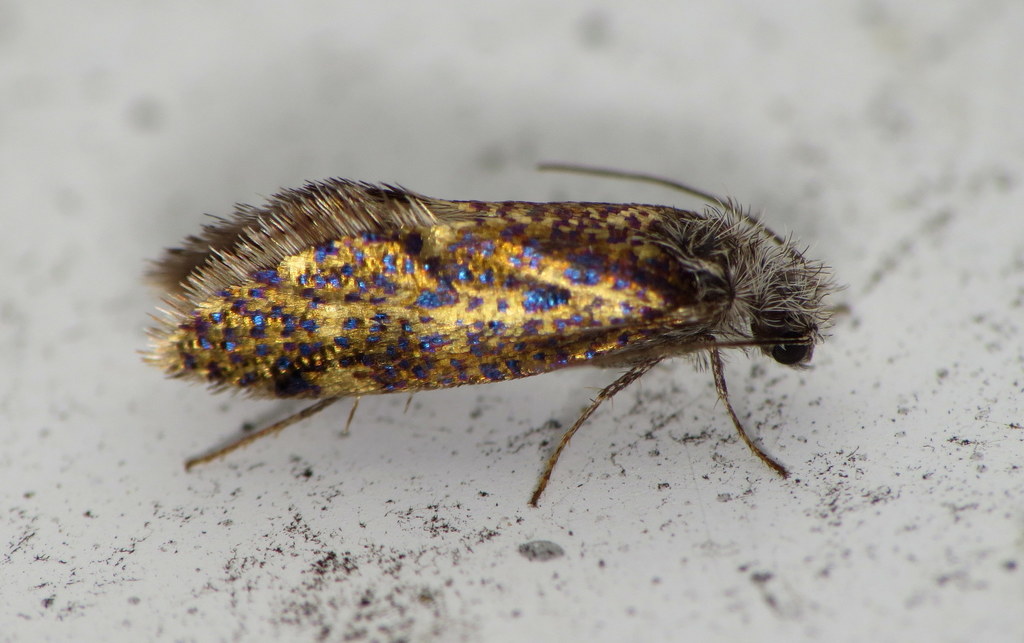
Adult moths have a 10 to 13 mm wingspan in males and about 9 to 12.5 mm in females, with golden-bronze forewings speckled with darker scales and pale grayish hindwings that show a slight purplish shine. The larvae feed on oak (Quercus) and chestnut (Castanea) leaves, mining them and can harm these trees. Adults fly from late February to late May in a single generation, after which full-grown larvae drop to the soil, burrow, and spin a tough oval cocoon before pupating.
Source: Wikipedia
How to recognize it
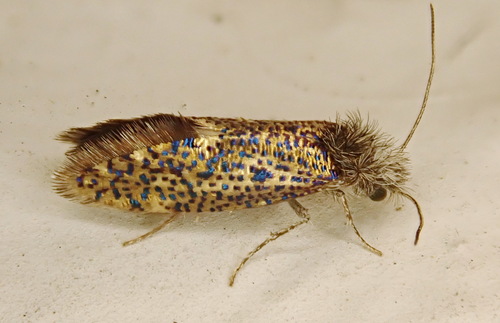
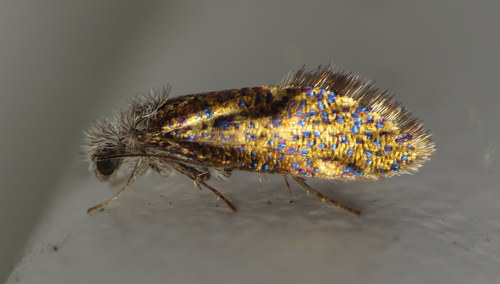
Forewings are golden bronze with many tiny darker specks. Hindwings are a lighter gray with a faint purplish sheen and have relatively broad scales.
Source: Wikipedia
Size
Males have a wingspan of about 10 to 13 mm; females are slightly smaller at 9 to 12.5 mm.
Source: Wikipedia
Where it lives
Adults are on the wing from late February through late May, producing one generation each year.
Source: Wikipedia
What it eats
Larvae feed on species of chestnut (Castanea) and oak (Quercus). They create mines inside the leaves of their host plants.
Source: Wikipedia
Life cycle
Adults fly from late February to late May, completing one generation per year. After feeding, full-grown larvae drop to the soil, burrow, and spin a relatively tough oval cocoon made of silk and soil particles before pupating.
Source: Wikipedia
When you see it
The moth is active from late February through late May.
Source: Wikipedia
Where it comes from
It occurs from Nova Scotia down to Florida and westward to Illinois and Mississippi.
Source: Wikipedia
Where it is found in the US
Recorded in 34 of 51 states and DC. Most records: Massachusetts, Maryland, Mississippi, New Jersey, Connecticut, North Carolina, Louisiana, Michigan.
Darker = more records. Counts are museum and citizen-science records, not population size.
Source: GBIF
Status: native in North America; native in United States; native in Canada. Source: iNaturalist
Months it is reported in the US
Source: GBIF
More photos


Questions people ask
When can I expect to see adult Chinquapin leafminer moths?
Adults are active from late February to late May, producing a single generation each year.
Source: Wikipedia
What trees do the larvae affect?
The larvae feed on oak and chestnut leaves, mining them and potentially damaging the foliage.
Source: Wikipedia
What do the larvae do after they finish feeding?
Full-grown larvae drop to the ground, burrow into the soil, and spin a tough oval cocoon before pupating.
Source: Wikipedia
Sources
- Wikipedia: https://en.wikipedia.org/wiki/Dyseriocrania_griseocapitella
Look it up elsewhere: GBIF · iNaturalist · BugGuide · Wikipedia
Text written 2026-10-24 from the sources above and checked sentence by sentence against them. Data fetched 2026-10-24.