 Bug FAQ
Chicken Mite
Dermanyssus gallinae · Order: Mesostigmata · Family: Dermanyssidae
Also called: Red Poultry Mite, pigeon mite, poultry mite, poultry red mite
Source: Wikipedia, arthropod.uark.edu
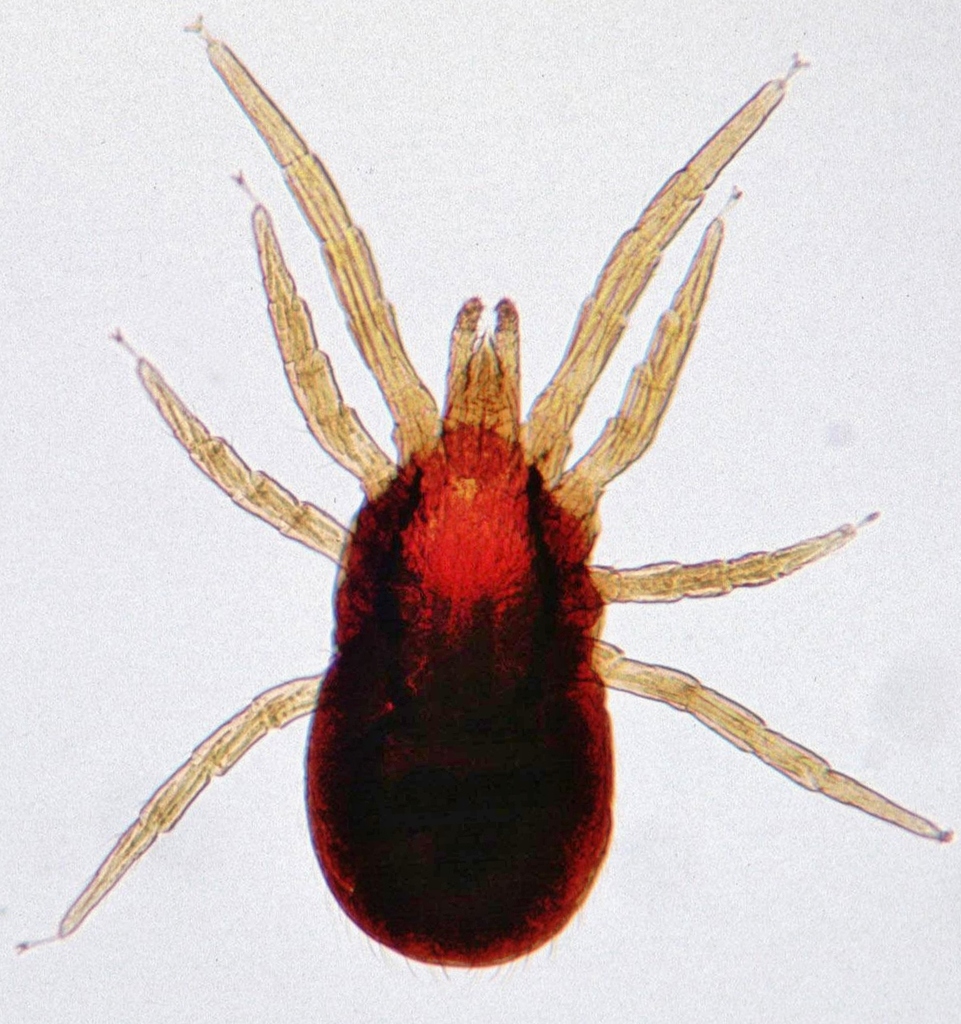
Adult chicken mites are about 0.75 to 1 mm long, grayish-white when unfed and turn reddish-brown after a blood meal. They feed on blood, usually at night, and can bite humans, producing itchy papules, vesicles or urticarial plaques. Infestations often come from birds or bird nests near homes, and the mites can survive months without feeding.
Source: Wikipedia, arthropod.uark.edu
How to recognize it
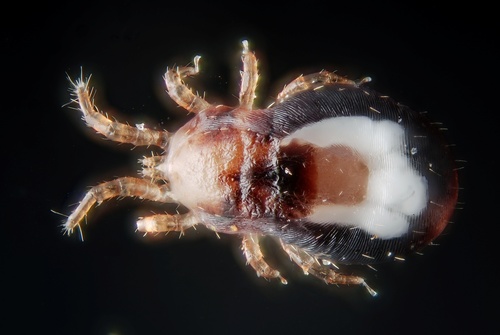
Unfed mites appear yellow or brown, while engorged ones become dark brown or black. They have long legs and a grayish-white body that turns reddish-brown after feeding.
Source: arthropod.uark.edu, Wikipedia
Is it a pest in the house?
Infestations in people are called gamasoidosis. The mites cannot normally live and breed on people, and lasting infestations are rare. Mites may enter homes where birds roost and can also vector bird diseases.
Source: Wikipedia, arthropod.uark.edu
Does it bite or sting?
People bitten often wake with severe itching and may develop papular dermatitis, vesicles or urticarial plaques. The usual source of bites is nearby birds or bird nests such as pigeons, chickens or finches.
Source: Wikipedia, arthropod.uark.edu, NC State Extension
How to get rid of it
Control involves removing bird nests, reducing clutter, using pesticides judiciously, keeping humidity low, and cleaning regularly.
Source: Wikipedia, NC State Extension
Where it lives
They are found on wild birds, poultry and occasionally on humans, where the condition is called gamasoidosis.
Source: Wikipedia
What it eats
Chicken mites are obligate blood feeders, usually biting at night but sometimes during the day.
Source: Wikipedia
Life cycle
Their life cycle includes egg, larva, protonymph, deutonymph and adult, and can be completed in about seven days under favorable conditions. Six-legged larvae hatch in 2 to 3 days, do not feed, and molt to eight-legged protonymphs in 1 to 2 days.
Source: Wikipedia, arthropod.uark.edu
Lookalikes
It looks similar in size and appearance to the northern fowl mite (Ornithonyssus sylviarum). Unlike the northern fowl mite, chicken mites spend much of the day off the host, hiding in cracks and crevices.
Source: Wikipedia, NC State Extension
Where it is found in the US
Recorded in 22 of 51 states and DC. Most records: Iowa, Wisconsin, Michigan, Oregon, Utah, Ohio, Virginia, New Jersey.
Darker = more records. Counts are museum and citizen-science records, not population size.
Source: GBIF
Months it is reported in the US
Source: GBIF
More photos
Questions people ask
Do chicken mites bite people?
Yes, they bite and cause itching, papules, vesicles or urticarial plaques.
Source: Wikipedia, arthropod.uark.edu, NC State Extension
How can I get rid of chicken mites in my home?
Remove bird nests, reduce hiding places, keep humidity low, clean thoroughly and consider targeted pesticide use.
Source: Wikipedia, NC State Extension
What do chicken mites look like?
They are 0.75 to 1 mm long, grayish-white when unfed and turn reddish-brown after feeding, with long legs.
Source: Wikipedia, arthropod.uark.edu
Where do chicken mites come from?
They are associated with wild birds, poultry and bird nests, and can enter homes where birds roost.
Source: Wikipedia, arthropod.uark.edu
Sources
- Wikipedia: https://en.wikipedia.org/wiki/Dermanyssus_gallinae
- arthropod.uark.edu: https://arthropod.uark.edu/?p=27254
- NC State Extension: https://content.ces.ncsu.edu/mites-that-bug-people
Look it up elsewhere: GBIF · iNaturalist · BugGuide · ITIS · Wikipedia
Text written 2026-10-23 from the sources above and checked sentence by sentence against them. Data fetched 2026-10-23.