 Bug FAQ
Cherry-eye Sprite
Pseudagrion sublacteum · Order: Odonata · Family: Coenagrionidae
Also called: Riffle Sprite, River Sprite
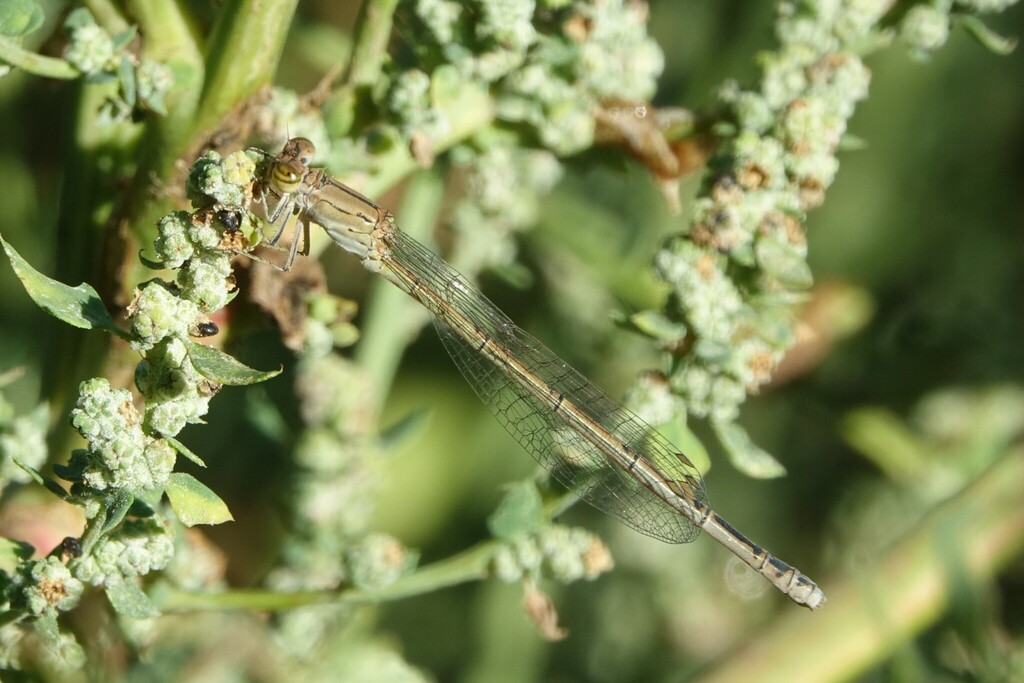
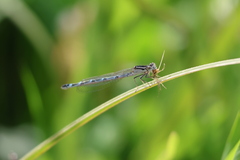
The cherry-eye sprite is a medium-sized damselfly about 32 to 41 mm long with a wingspan of 42 to 48 mm. It lives around subtropical and tropical streams and rivers and is found across Africa from the north of South Africa to West and North Africa, as well as the Middle East. Its face is brick-red, the front of its eyes are cherry-red, and it has distinctive mauvish-reddish-brown post-ocular spots joined by a stripe.
Source: Wikipedia
How to recognize it
The thorax is mauvish brown aging to purplish brown with black dorsal stripes, sides are light blue, and the abdomen is black above, green below, with bright blue on segments eight and nine and a black-topped segment ten.
Source: Wikipedia
Size
Length ranges from 32 to 41 mm and wingspan from 42 to 48 mm.
Source: Wikipedia
Where it lives
It inhabits subtropical or tropical streams and rivers.
Source: Wikipedia
Where it comes from
It occurs in Africa from northern South Africa up through West and North Africa, and also in the Middle East.
Source: Wikipedia
Lookalikes
Pseudagrion sublacteum, known as the cherry-eye sprite, belongs to the damselfly family Coenagrionidae.
Source: Wikipedia
Questions people ask
What does the cherry-eye sprite look like?
It has a brick-red face, cherry-red front eyes, black-above/green-below rear eyes, mauvish-reddish-brown post-ocular spots joined by a stripe, a mauvish-brown thorax with black stripes, light-blue sides, and a black-green abdomen with bright blue on the last segments.
Source: Wikipedia
Same family (Coenagrionidae)
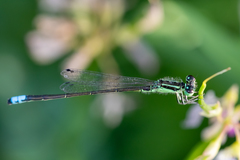
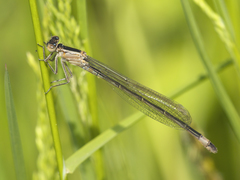

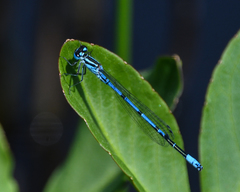

Sources
- Wikipedia: https://en.wikipedia.org/wiki/Pseudagrion_sublacteum
Look it up elsewhere: GBIF · iNaturalist · BugGuide · Wikipedia
Text written 2026-10-23 from the sources above and checked sentence by sentence against them. Data fetched 2026-10-23.