 Bug FAQ
Cedar Beetle
Sandalus niger · Order: Coleoptera · Family: Rhipiceridae
Also called: Cicada Parasite Beetle
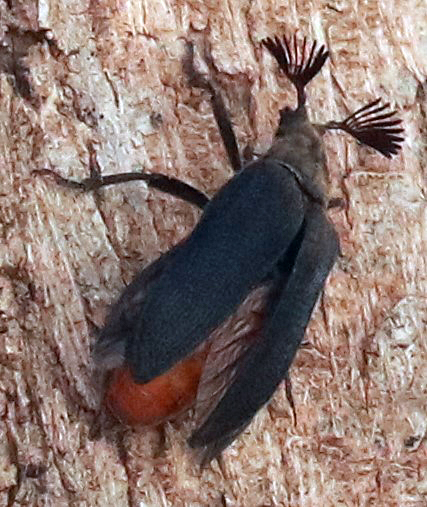
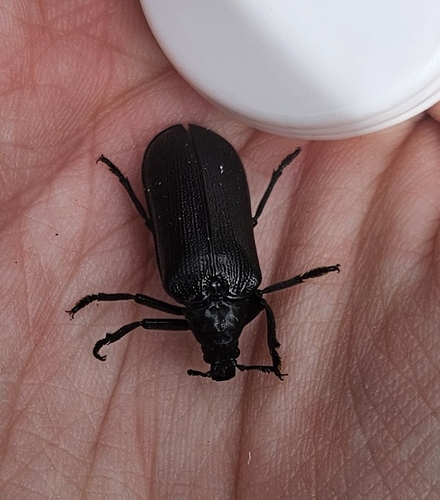
The cedar beetle is called Sandalus niger and lives in North America. Females climb high in elm trees to lay eggs, while males fly in warm afternoons. It is a cicada parasite beetle in the family Rhipiceridae.
Source: Wikipedia
How to recognize it
The cedar beetle’s scientific name is Sandalus niger.
Source: Wikipedia
Where it lives
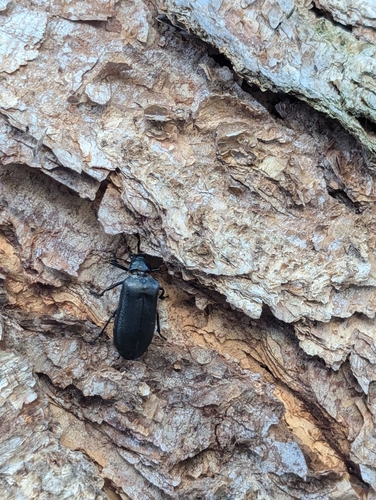
It lives in North America. Females are usually seen motionless on the side of elm trees. After mating, females climb high in trees, often ten meters or more.
Source: Wikipedia
What it eats
It is a cicada parasite beetle, feeding on cicadas.
Source: Wikipedia
Life cycle
After mating, females ascend high in trees and lay eggs in holes or behind bark of elms.
Source: Wikipedia
When you see it
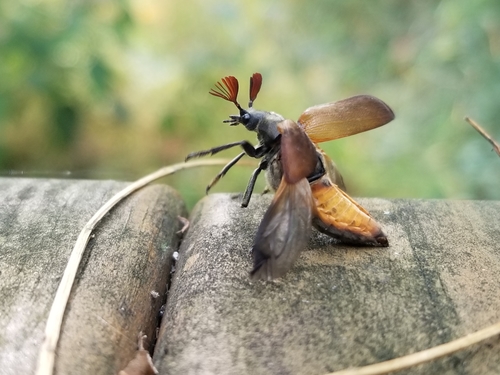
Males fly in the afternoon when temperatures are between 15 and 30 °C.
Source: Wikipedia
Where it comes from
It is native to North America.
Source: Wikipedia
Lookalikes
It belongs to the family Rhipiceridae, a group of cicada parasite beetles.
Source: Wikipedia
Where it is found in the US
Recorded in 34 of 51 states and DC. Most records: Ohio, Illinois, Kentucky, Indiana, Texas, Pennsylvania, Kansas, Nebraska.
Darker = more records. Counts are museum and citizen-science records, not population size.
Source: GBIF
Status: native in North America; native in Canada. Source: iNaturalist
Months it is reported in the US
Source: GBIF
More photos
Questions people ask
When are male cedar beetles active?
Males fly in the afternoon when it is between 15 and 30 °C.
Source: Wikipedia
Where do female cedar beetles lay their eggs?
Females climb high in elm trees and deposit eggs in holes or under bark.
Source: Wikipedia
Sources
- Wikipedia: https://en.wikipedia.org/wiki/Sandalus_niger
Look it up elsewhere: GBIF · iNaturalist · BugGuide · ITIS · Wikipedia
Text written 2026-10-23 from the sources above and checked sentence by sentence against them. Data fetched 2026-10-23.