 Bug FAQ
Plaster Beetle (Cartodere constricta)
Cartodere constricta · Order: Coleoptera · Family: Latridiidae
Source: Wikipedia
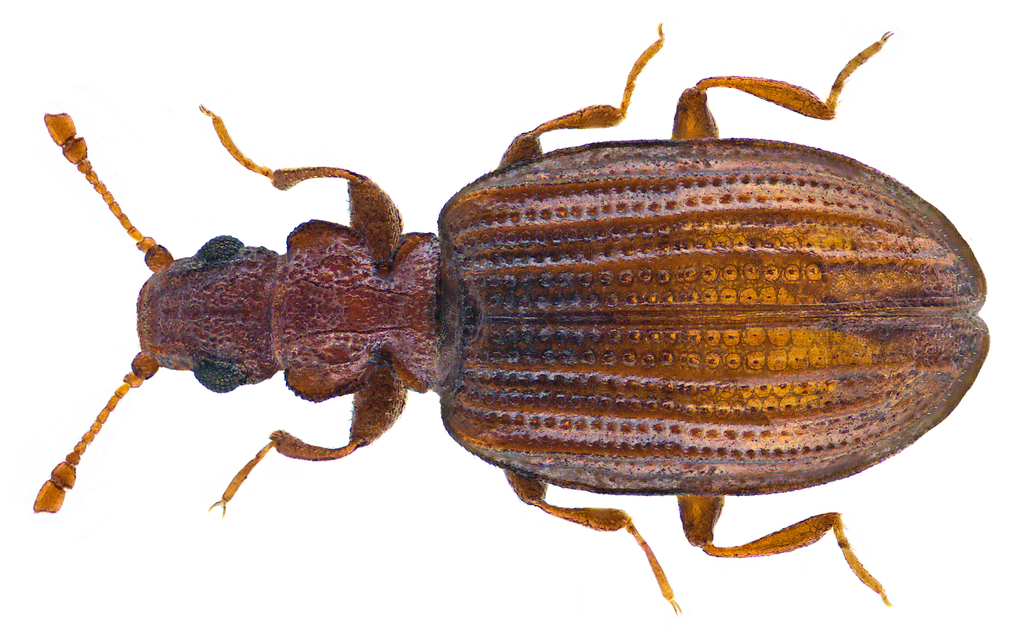
The plaster beetle is a tiny brown scavenger about 1.3 to 2.0 mm long. It lives where mold grows, such as in stored grains, dry fruit, houses and feed mills. Keeping humidity below 20 % dries out mold and stops the beetle.
Source: Wikipedia
How to recognize it
Cartodere constricta is a minute brown scavenger beetle in the Latridiidae family.
Source: Wikipedia
Size
Adults measure between 1.3 and 2.0 mm in length.
Source: Wikipedia
How to get rid of it
Drying the area to keep relative humidity under 20 % prevents mold growth and eliminates the beetle.
Source: Wikipedia
Where it lives
In North America it is found in southern Canada and throughout the United States.
Source: Wikipedia
What it eats
The beetle feeds on mold.
Source: Wikipedia
Where it comes from
Originally a Palearctic species, it now also lives in the Nearctic region.
Source: Wikipedia
Where it is found in the US
Recorded in 16 of 51 states and DC. Most records: Alaska, California, Kansas, Texas, Arizona, Kentucky, Ohio, Illinois.
Darker = more records. Counts are museum and citizen-science records, not population size.
Source: GBIF
Status: native in North America; native in Canada. Source: iNaturalist
Months it is reported in the US
Source: GBIF
More photos
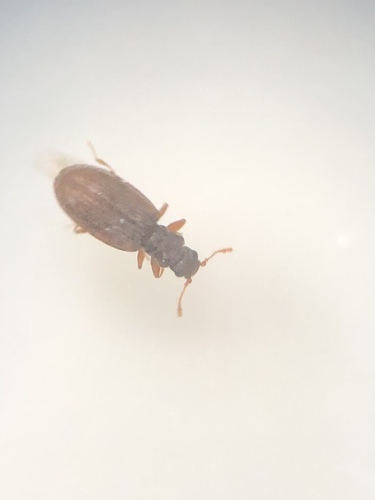
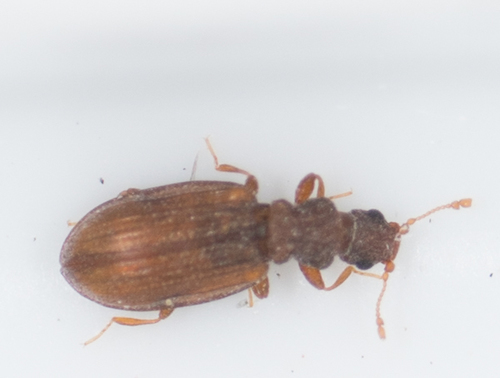
Questions people ask
How do I get rid of plaster beetles?
Lower the humidity below 20 % to stop mold, which removes their food source.
Source: Wikipedia
Where are plaster beetles found in the house?
They appear where mold is present, such as in stored grains, dry fruit, and damp corners.
Source: Wikipedia
Same family (Latridiidae)
Sources
- Wikipedia: https://en.wikipedia.org/wiki/Cartodere_constricta
Look it up elsewhere: GBIF · iNaturalist · BugGuide · ITIS · Wikipedia
Text written 2026-10-26 from the sources above and checked sentence by sentence against them. Data fetched 2026-10-26.