 Bug FAQ
California Giant Stonefly
Pteronarcys californica · Order: Plecoptera · Family: Pteronarcyidae
Also called: Giant Salmonfly

The nymphs can grow longer than 5 cm (2 in) and adults have bright orange abdomen and leg joints with wings longer than the body. They live in fast-moving streams on medium to large rocks, stay in the water for three to four years, and emerge near the shore in shallow water before mating. These insects are detritivores that shred stream debris into smaller pieces.
Source: Wikipedia
How to recognize it
Nymphs have a dark back and a lighter belly.
Source: Wikipedia
Size
Nymphs can exceed 5 cm (2 in) in length. Adults have bright orange abdomen, leg joints, and thorax joints, with wings longer than the body kept flat when at rest.
Source: Wikipedia
What it eats
They are detritivores that eat partially broken-down stream debris. As shredders, they break large bits of detritus into smaller pieces while feeding.
Source: Wikipedia
Life cycle
Nymphs remain in the water for three to four years before emerging. Just before emergence, they gather on shallow, partially exposed rocks near the shoreline.
Source: Wikipedia
When you see it
Their emergence is a highlight of the spring fishing season for fly-fishermen.
Source: Wikipedia
Lookalikes
It belongs to the giant stonefly family Pteronarcyidae and is commonly called a salmonfly.
Source: Wikipedia
Where it is found in the US
Recorded in 11 of 51 states and DC. Most records: California, Colorado, Oregon, Idaho, Utah, Wyoming, Washington, Montana.
Darker = more records. Counts are museum and citizen-science records, not population size.
Source: GBIF
Status: native in North America; native in Canada. Source: iNaturalist
Months it is reported in the US
Source: GBIF
More photos
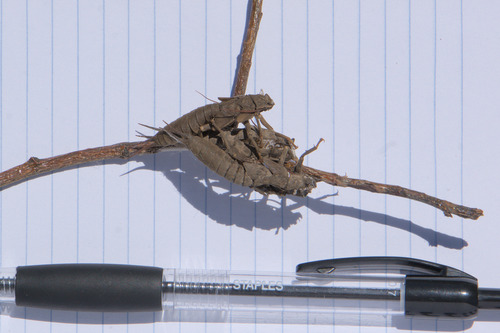
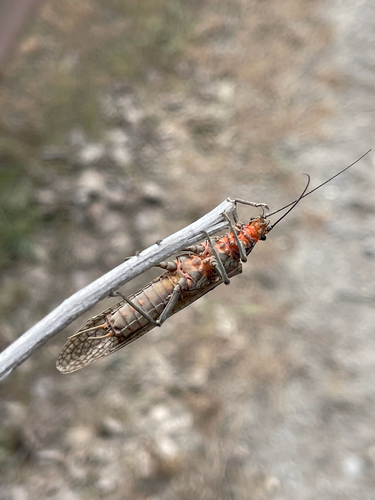
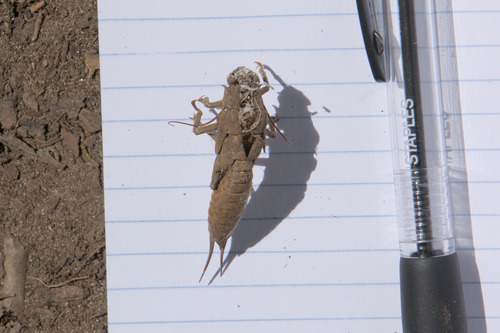
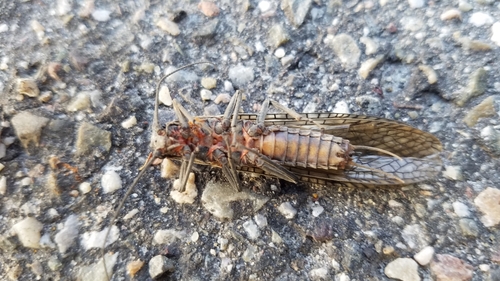
Same family (Pteronarcyidae)

Sources
- Wikipedia: https://en.wikipedia.org/wiki/Pteronarcys_californica
Look it up elsewhere: GBIF · iNaturalist · BugGuide · ITIS · Wikipedia
Text written 2026-10-23 from the sources above and checked sentence by sentence against them. Data fetched 2026-10-23.