 Bug FAQ
Cactus Scattered Cochineal
Dactylopius opuntiae · Order: Hemiptera · Family: Dactylopiidae
Also called: False carmine cochineal, prickly pear cochineal
Source: Wikipedia
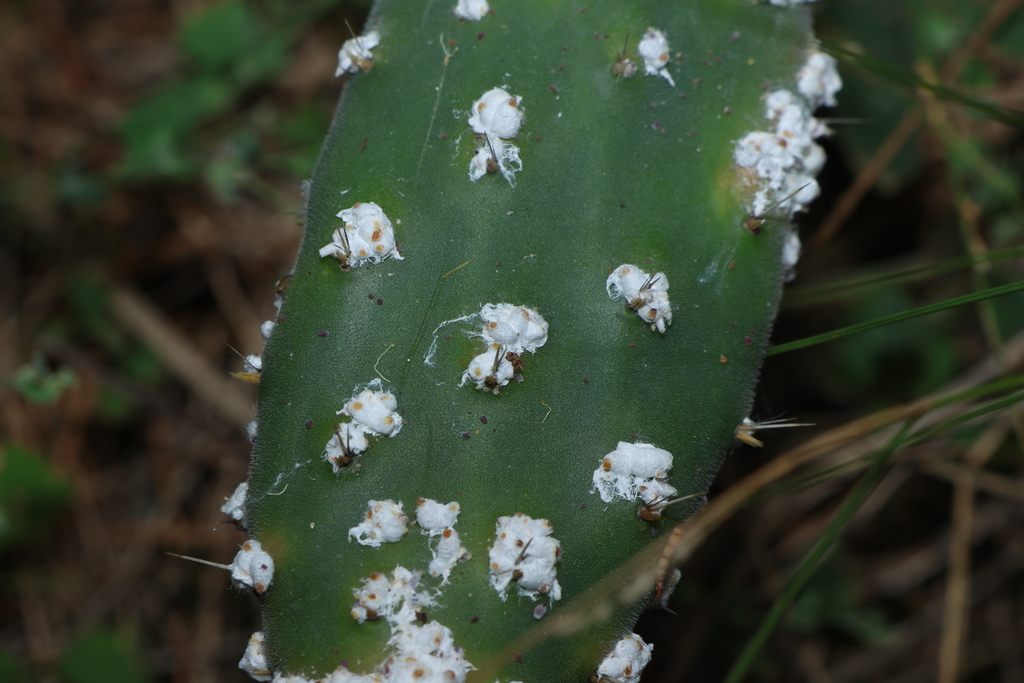
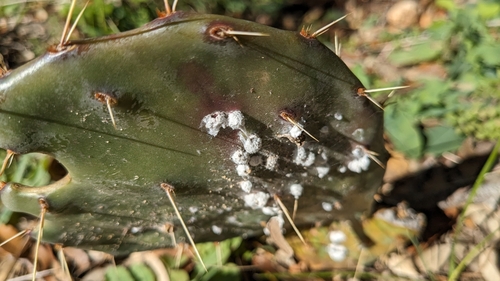
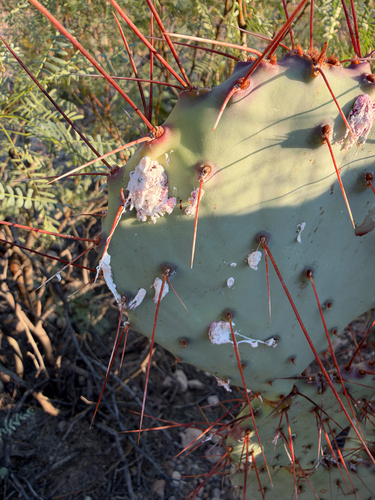
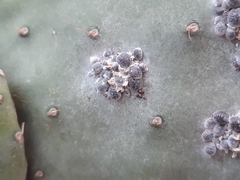
Adult females stay fixed on the plant and form large colonies covered in white wax, creating noticeable clusters. The insect is native to Mexico and nearby Central American countries and has been used to control invasive prickly pear in Africa.
Source: Wikipedia
How to recognize it
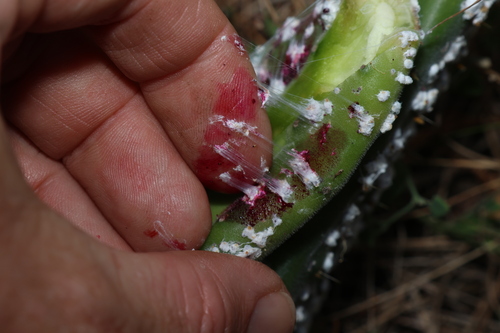
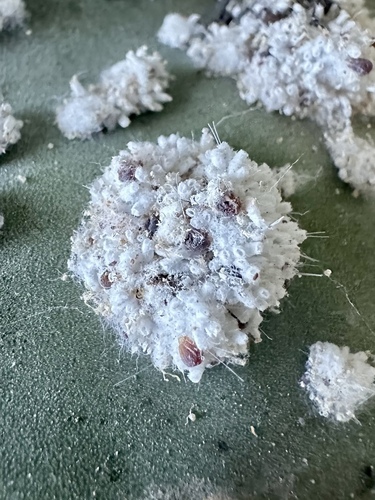
Females have an oval, purple-red body covered with white, cotton-like wax. They show truncate dorsal setae, clusters of quinquelocular pores with tubular ducts, and lack microducts and cellular anal rings with setae.
Source: Wikipedia
Size
Colonies can contain a few thousand individuals of mixed ages, all sessile on the plant.
Source: Wikipedia
Life cycle
Adult females remain fixed in place and build colonies of many individuals on the host plant.
Source: Wikipedia
Where it comes from
It originates from Mexico and neighboring Central American countries.
Source: Wikipedia
Where it is found in the US
Recorded in 5 of 51 states and DC. Most records: Texas, California, Arizona, Hawaii, Ohio.
Darker = more records. Counts are museum and citizen-science records, not population size.
Source: GBIF
Months it is reported in the US
Source: GBIF
More photos
Questions people ask
How does Dactylopius opuntiae affect prickly pear plants?
It forms large wax-covered colonies that suppress flowering and fruiting and can kill the plants.
Source: Wikipedia
Same family (Dactylopiidae)
Sources
- Wikipedia: https://en.wikipedia.org/wiki/Dactylopius_opuntiae
Look it up elsewhere: GBIF · iNaturalist · BugGuide · ITIS · Wikipedia
Text written 2026-10-23 from the sources above and checked sentence by sentence against them. Data fetched 2026-10-22.