 Bug FAQ
Bumblebee Millipede
Anadenobolus monilicornis · Order: Spirobolida · Family: Rhinocricidae
Also called: Caribbean millipede, Yellow-band Millipede, Yellow-banded Millipede
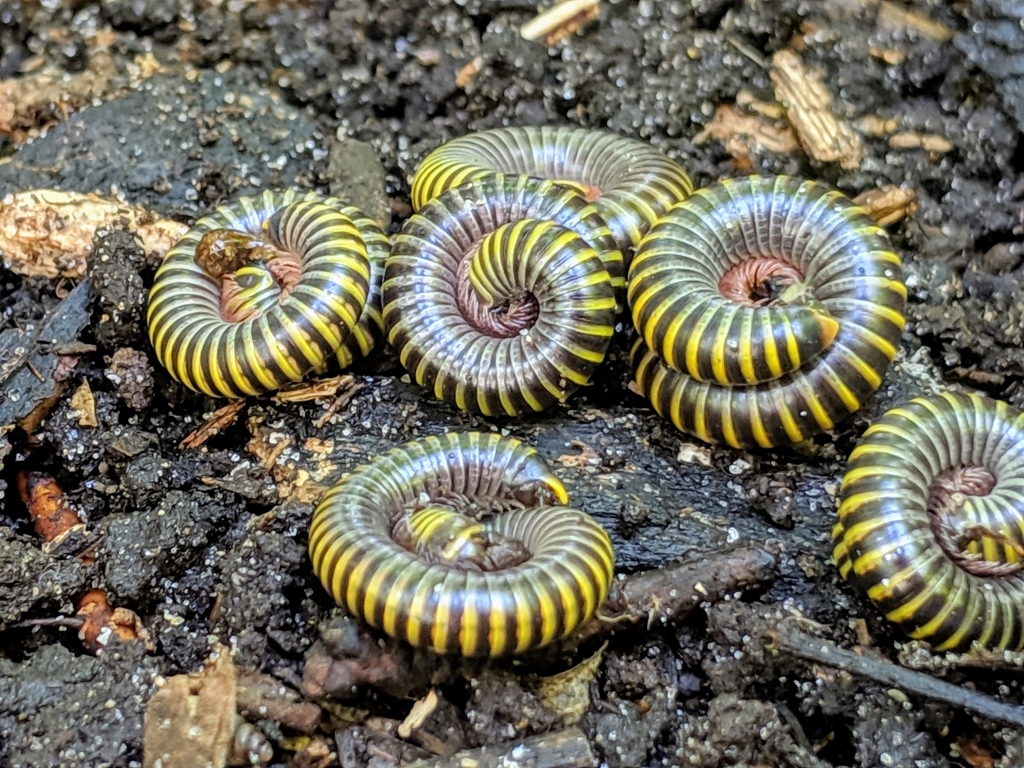
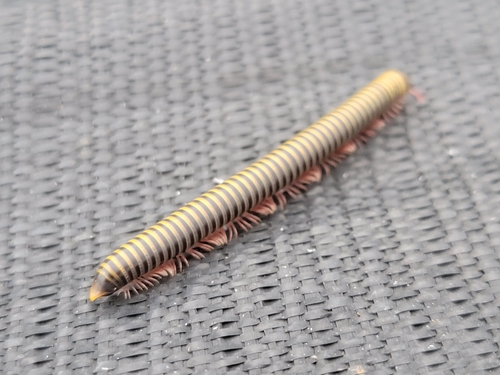
Bumblebee millipedes are dark brown with yellow bands and red legs and antennae, growing to about 2.5 to 3 cm long. They live in leaf litter in the Caribbean and have been introduced to southern Florida, where they occur in large numbers but are not considered a pest.
Source: Wikipedia
How to recognize it
The millipede’s body is dark brown with distinctive yellow bands, and its legs and antennae are red.
Source: Wikipedia
Size
Adults measure about 2.5 to 3 centimetres (1.0 to 1.2 inches) in length.
Source: Wikipedia
Is it a pest in the house?
In southern Florida the species can appear in large numbers but is not regarded as a household pest.
Source: Wikipedia
Where it lives
It inhabits leaf litter on the forest floor.
Source: Wikipedia
What it eats
Birds and captive monkeys have been seen crushing them and rubbing their secretions on feathers or fur, possibly to repel insects.
Source: Wikipedia
Where it is found in the US
Recorded in 17 of 51 states and DC. Most records: Florida, Hawaii, Texas, Indiana, Arizona, Wisconsin, Missouri, New Jersey.
Darker = more records. Counts are museum and citizen-science records, not population size.
Source: GBIF
Status: introduced in Canada; introduced in United States. Source: iNaturalist
Months it is reported in the US
Source: GBIF
More photos
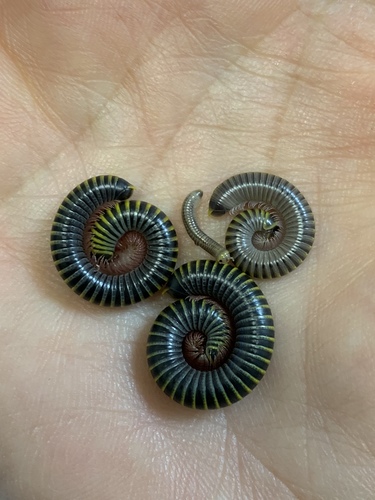
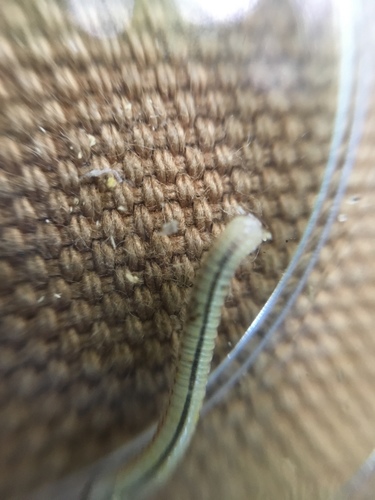
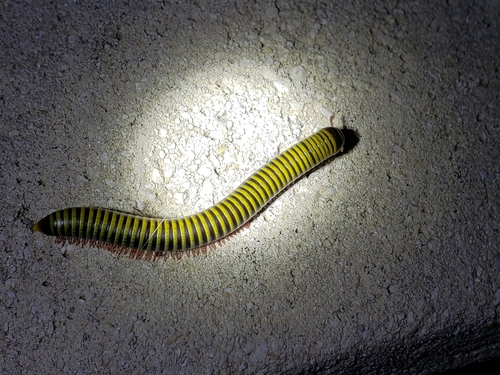
Questions people ask
Is the bumblebee millipede a pest in my home?
No, although it can be abundant in southern Florida, it is not considered a pest for homes.
Source: Wikipedia
Sources
- Wikipedia: https://en.wikipedia.org/wiki/Anadenobolus_monilicornis
Look it up elsewhere: GBIF · iNaturalist · BugGuide · ITIS · Wikipedia
Text written 2026-10-22 from the sources above and checked sentence by sentence against them. Data fetched 2026-10-22.