 Bug FAQ
Bronze bug
Thaumastocoris peregrinus · Order: Hemiptera · Family: Thaumastocoridae
Also called: Winter bronzing bug
Source: Wikipedia
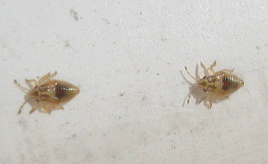
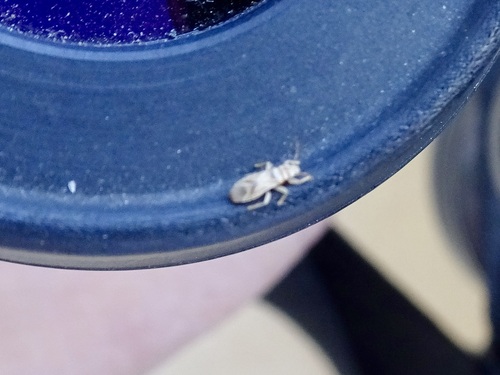
Adult bronze bugs are tiny, 2.3 to 2.9 mm long, light brown with darker females, while young nymphs are milk-white to orange with black spots. They feed on the sap of many eucalyptus species, and heavy infestations lead to leaf loss, senescence, thinning of the canopy and sometimes branch dieback.
Source: Wikipedia
How to recognize it
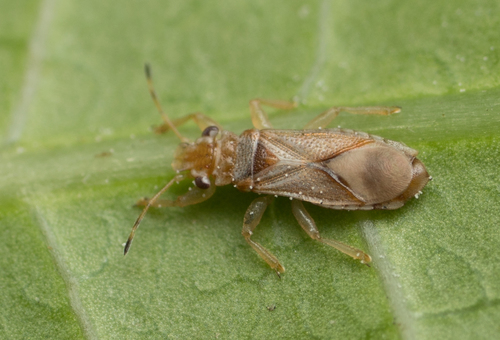
Adults are light brown with darker areas, and females are generally darker than males.
Source: Wikipedia
Size
Males measure 2.3 to 2.9 mm in length and 0.7 to 1.0 mm in width; females are 2.3 to 2.7 mm long and 0.7 to 0.8 mm wide.
Source: Wikipedia
Where it lives
The bronze bug is common along the east coast of Australia.
Source: Wikipedia
Life cycle
Nymphs pass through five instars before becoming adults.
Source: Wikipedia
Where it comes from
It has been recorded in North America, specifically Mexico and California. It also occurs in Africa, Europe, the Middle East, South America, the Caribbean and New Zealand.
Source: Wikipedia
Where it is found in the US
Recorded in 3 of 51 states and DC. Most records: California, Hawaii, Arizona.
Darker = more records. Counts are museum and citizen-science records, not population size.
Source: GBIF
Months it is reported in the US
Source: GBIF
More photos
Questions people ask
Where is the bronze bug found?
It is common on Australia’s east coast and has spread to eucalyptus plantations in Africa, Europe, the Middle East, North and South America, the Caribbean and New Zealand.
Source: Wikipedia
Sources
- Wikipedia: https://en.wikipedia.org/wiki/Thaumastocoris_peregrinus
Look it up elsewhere: GBIF · iNaturalist · BugGuide · ITIS · Wikipedia
Text written 2026-10-28 from the sources above and checked sentence by sentence against them. Data fetched 2026-10-28.