 Bug FAQ
Bristly Millipede
Polyxenus lagurus · Order: Polyxenida · Family: Polyxenidae
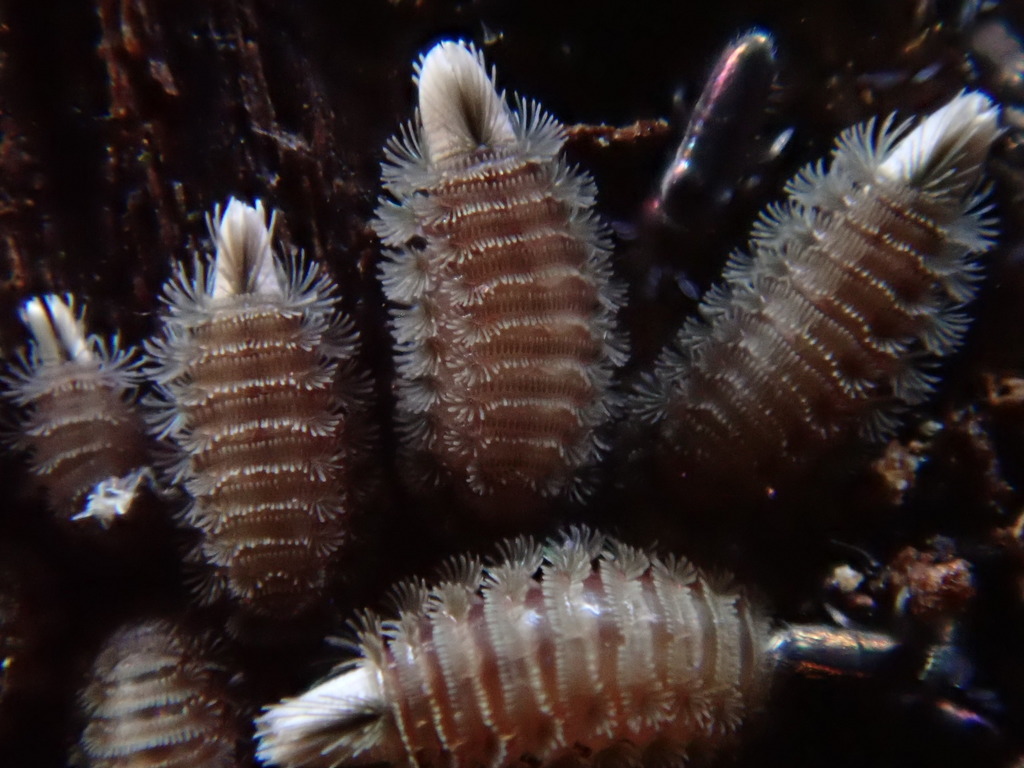
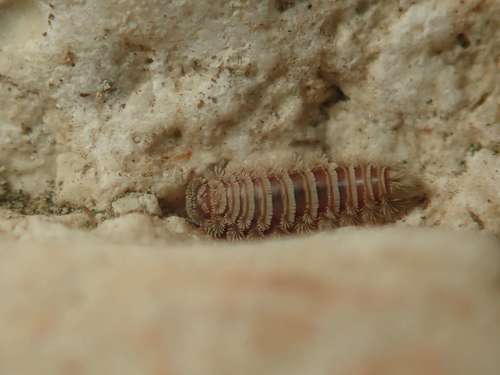
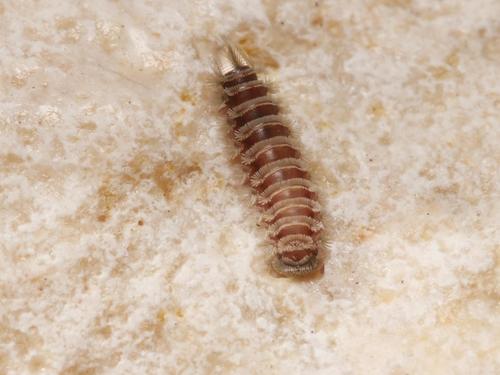
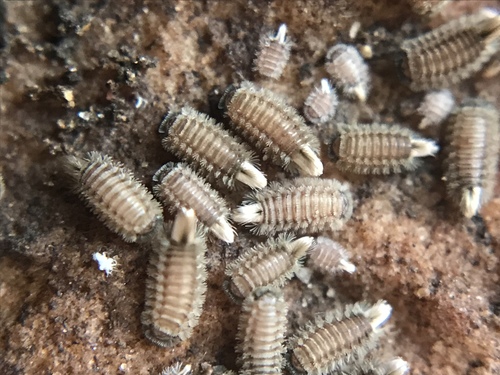
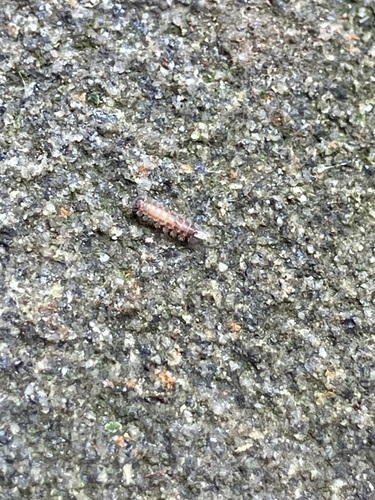
The bristly millipede is a tiny, flat, pale-brown creature about 2 to 4 mm long and covered with distinctive brown bristles arranged in rows on each segment. It lives under bark of dead conifers, in leaf litter, on rocks, and on old stone or brick walls across the Holarctic region, especially in Europe and North America. The millipede feeds on lichens, algae and small fungi, grows by molting until it reaches a fixed number of segments, and reproduces with indirect sperm transfer.
Source: Wikipedia
How to recognize it
Its body is flat, pale brown and covered with brown bristles in two transverse rows, plus lateral tufts on each segment and two long brushes on the telson.
Source: Wikipedia
Size
Adults measure 2 to 4 mm in length and 0.5 to 1 mm in width.
Source: Wikipedia
What it eats
Feeds on lichens, algae and small fungi.
Source: Wikipedia
Life cycle
Juveniles molt, adding segments and legs until reaching the adult segment count. Males transfer sperm to females indirectly in sexually reproducing populations.
Source: Wikipedia
When you see it
Most easily found at night in humid conditions, but also active by day in warm, dry, sunny weather.
Source: Wikipedia
Where it comes from
Distributed throughout the Holarctic realm, common in Europe and North America, and the only Polyxenida in the British Isles.
Source: Wikipedia
Where it is found in the US
Recorded in 37 of 51 states and DC. Most records: Colorado, Massachusetts, Pennsylvania, Ohio, New York, Montana, North Carolina, Oregon.
Darker = more records. Counts are museum and citizen-science records, not population size.
Source: GBIF
Status: native in North America; native in United States; native in Canada. Source: iNaturalist
Months it is reported in the US
Source: GBIF
More photos
Sources
- Wikipedia: https://en.wikipedia.org/wiki/Polyxenus_lagurus
Look it up elsewhere: GBIF · iNaturalist · BugGuide · ITIS · Wikipedia
Text written 2026-10-23 from the sources above and checked sentence by sentence against them. Data fetched 2026-10-22.