 Bug FAQ
Brickwork Woodlouse
Porcellio spinicornis · Order: Isopoda · Family: Porcellionidae
Also called: painted woodlouse, Brickwork Isopod
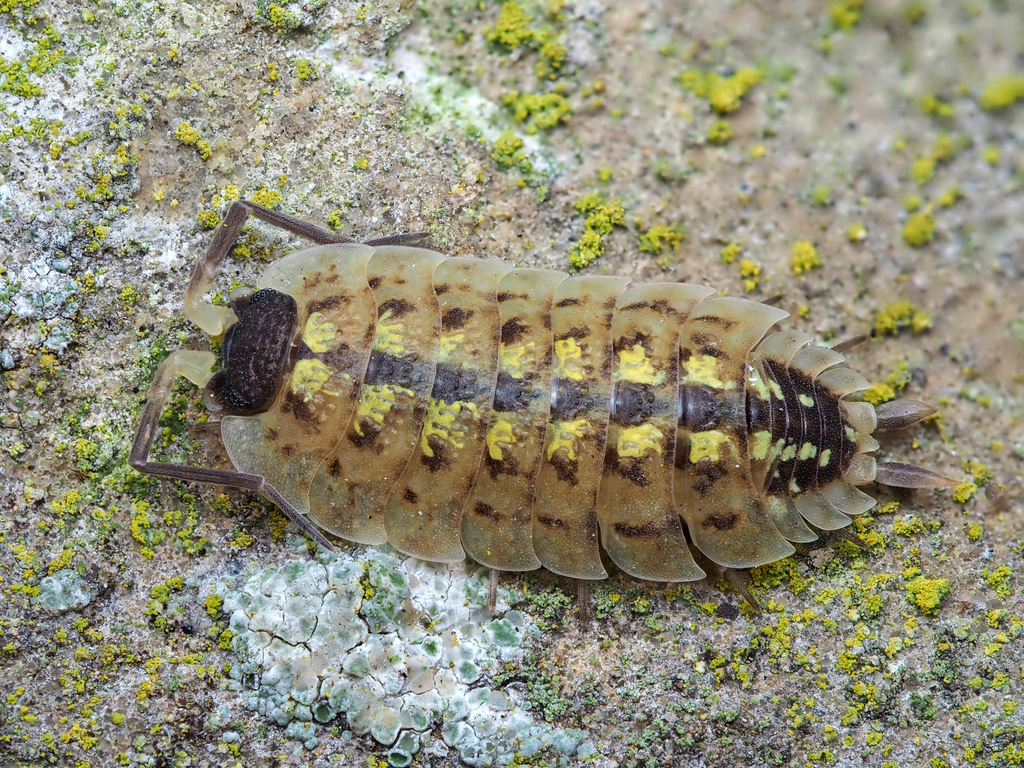
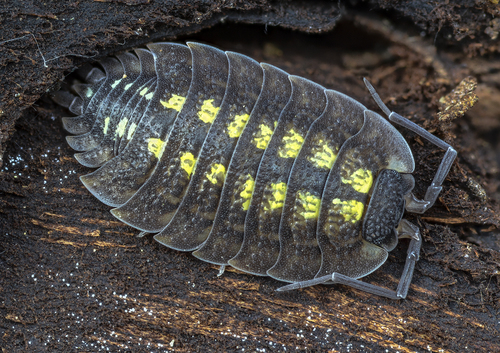
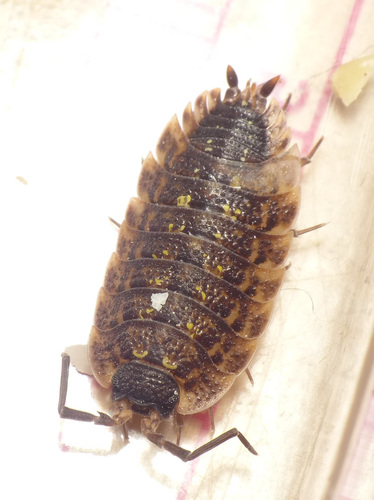
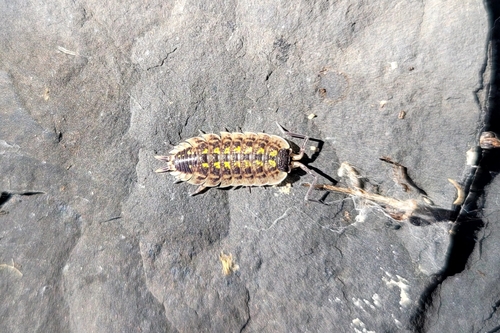
The brickwork woodlouse is a medium-sized isopod about 10 to 15 mm long and shows many colour forms, but all have dark heads and dark rear segments. It lives in a range of European habitats such as forests, grasslands and rocks, and it has also been introduced to North America. The species feeds on dead plant material, develops from yolky eggs inside a marsupium, and is active at night.
Source: Wikipedia
Size
Adults are typically 10 to 15 mm long.
Source: Wikipedia
Where it lives
It occurs in forests, grasslands and rocky areas across Europe. It has also been introduced to North America.
Source: Wikipedia
What it eats
It eats dead plant material such as leaves, twigs and bark.
Source: Wikipedia
Life cycle
It develops directly from yolky eggs like all isopods.
Source: Wikipedia
When you see it
It is nocturnal and mainly active at night.
Source: Wikipedia
Where it comes from
The species is widespread in Europe and introduced to North America.
Source: Wikipedia
Where it is found in the US
Recorded in 29 of 51 states and DC. Most records: New York, Minnesota, Michigan, Wisconsin, Vermont, Illinois, Ohio, Massachusetts.
Darker = more records. Counts are museum and citizen-science records, not population size.
Source: GBIF
Status: introduced in North America; introduced in Canada; introduced in United States. Source: iNaturalist
Months it is reported in the US
Source: GBIF
More photos
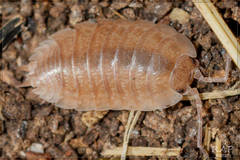
Same family (Porcellionidae)

Sources
- Wikipedia: https://en.wikipedia.org/wiki/Porcellio_spinicornis
Look it up elsewhere: GBIF · iNaturalist · BugGuide · ITIS · Wikipedia
Text written 2026-10-22 from the sources above and checked sentence by sentence against them. Data fetched 2026-10-22.