 Bug FAQ
Blueberry Cellophane Bee
Colletes validus · Order: Hymenoptera · Family: Colletidae
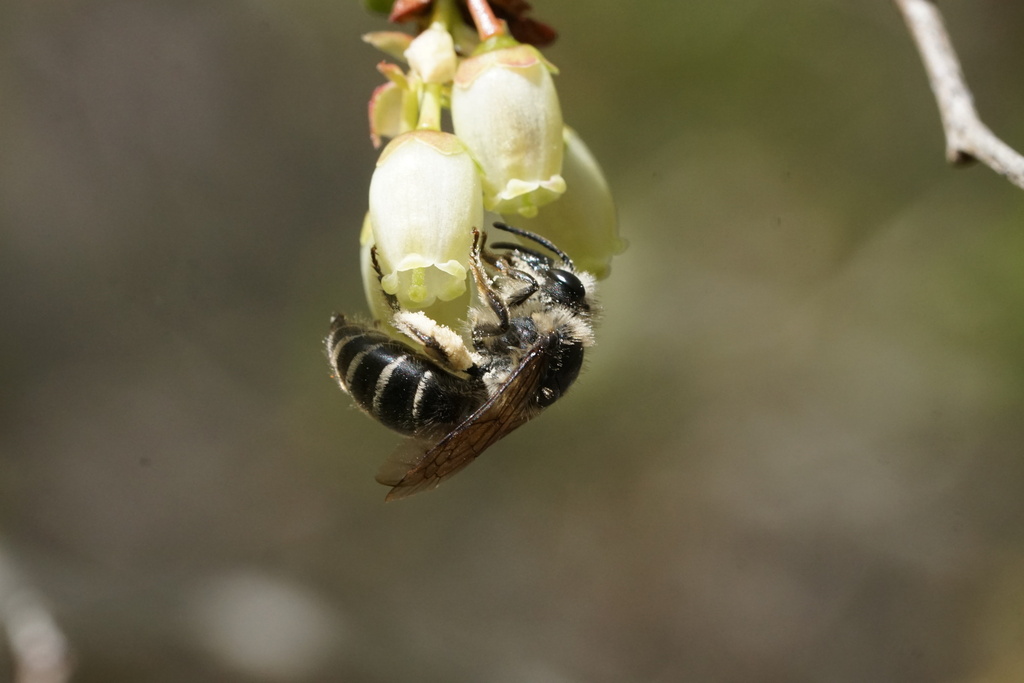
The blueberry cellophane bee is a medium-sized bee, about 10 to 14 mm long, with males covered in golden-tinged hairs and a long, triangular face. It nests in warm, open sandy soils near ericaceous plants across the eastern United States and southern Canada, and it is active in early spring when those plants flower. Females collect ericaceous pollen and nectar to create a viscous provision for their larvae, which develop underground and may enter diapause before pupating.
Source: Wikipedia
How to recognize it
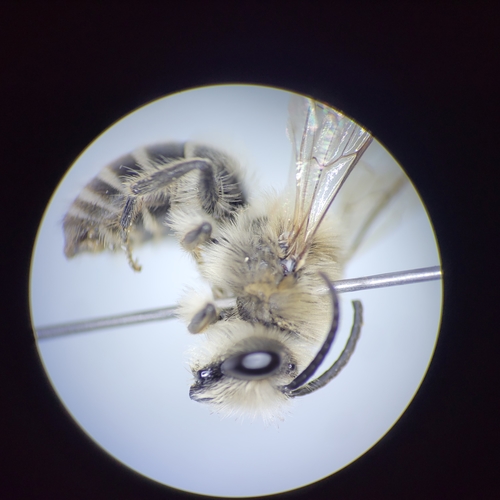
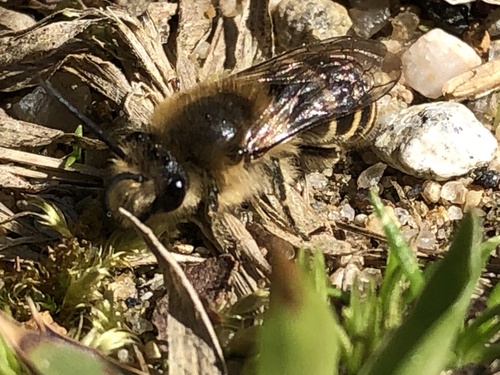
Males are densely covered with brown-yellowish hairs that look golden. Females have a reduced scopa on their hind legs. Both sexes have an S-shaped second recurrent wing vein and an exaggerated malar space that makes the face appear long and triangular.
Source: Wikipedia
Size
Females are 13 to 14 mm long and males are 10 to 12 mm long.
Source: Wikipedia
Is it a pest in the house?
They can nest on footpaths in sand-plain preserves or in open backyards on sandy oak-pine soils, which may cause conflict with people. They are docile and will not sting unless provoked.
Source: Wikipedia
Can it bite, sting or make you sick?
On hot days they may land on sweaty skin to collect salts.
Source: Wikipedia
Where it lives
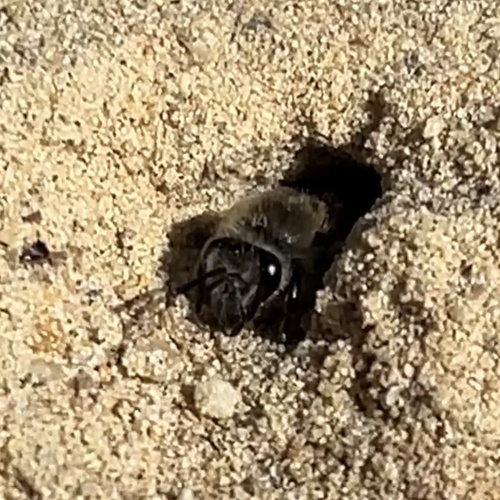
It lives mainly in eastern North America, nesting in sandy soils near ericaceous plants. Nests are found in open, warm sandy areas with sparse vegetation, often on flat ground or south-facing slopes.
Source: Wikipedia
What it eats
Females gather pollen from ericaceous plants and pack it in the bottom third of each brood cell. They then add nectar to create a viscous soup, some of which is held in the crop and regurgitated back at the nest.
Source: Wikipedia
Life cycle
Nesting lasts four to six weeks, with each nest completed in five to ten days. Eggs hatch into larvae that feed on the semi-liquid provisions, grow, and later pupate into adults. Some fully developed larvae may enter diapause before pupating.
Source: Wikipedia
When you see it
The species has one generation per year and flies in early spring when Vaccinium and other ericaceous plants bloom. Males disappear two to three weeks after emergence, leaving only females flying later in the season.
Source: Wikipedia
Lookalikes
It resembles C. inaequalis and C. thoracicus, but those species lack the long, triangular face. Adults of the blister beetle Tricrania sanguinipennis have been found inside completed C. validus cells.
Source: Wikipedia
Where it is found in the US
Recorded in 18 of 51 states and DC. Most records: Massachusetts, New Jersey, Michigan, New Hampshire, Maryland, New York, Connecticut, North Carolina.
Darker = more records. Counts are museum and citizen-science records, not population size.
Source: GBIF
Status: native in North America; native in United States; native in Canada. Source: iNaturalist
Months it is reported in the US
Source: GBIF
More photos
Questions people ask
Are blueberry cellophane bees dangerous to people?
No, they are docile and will not sting unless provoked.
Source: Wikipedia
Where do these bees build their nests?
They nest in warm, open sandy soils near ericaceous plants, often on flat ground or south-facing slopes.
Source: Wikipedia
When can I expect to see them?
Adults fly in early spring, coinciding with the bloom of Vaccinium and other ericaceous plants.
Source: Wikipedia
How can I tell a male blueberry cellophane bee from similar species?
Males have dense golden-tinged hairs and a long, triangular face, while similar species lack the elongated face.
Source: Wikipedia
Same family (Colletidae)



Sources
- Wikipedia: https://en.wikipedia.org/wiki/Colletes_validus
Look it up elsewhere: GBIF · iNaturalist · BugGuide · ITIS · Wikipedia
Text written 2026-10-25 from the sources above and checked sentence by sentence against them. Data fetched 2026-10-25.