 Bug FAQ
Black Laceweaver
Amaurobius ferox · Order: Araneae · Family: Amaurobiidae
Also called: Black lace-weaver
Source: Wikipedia
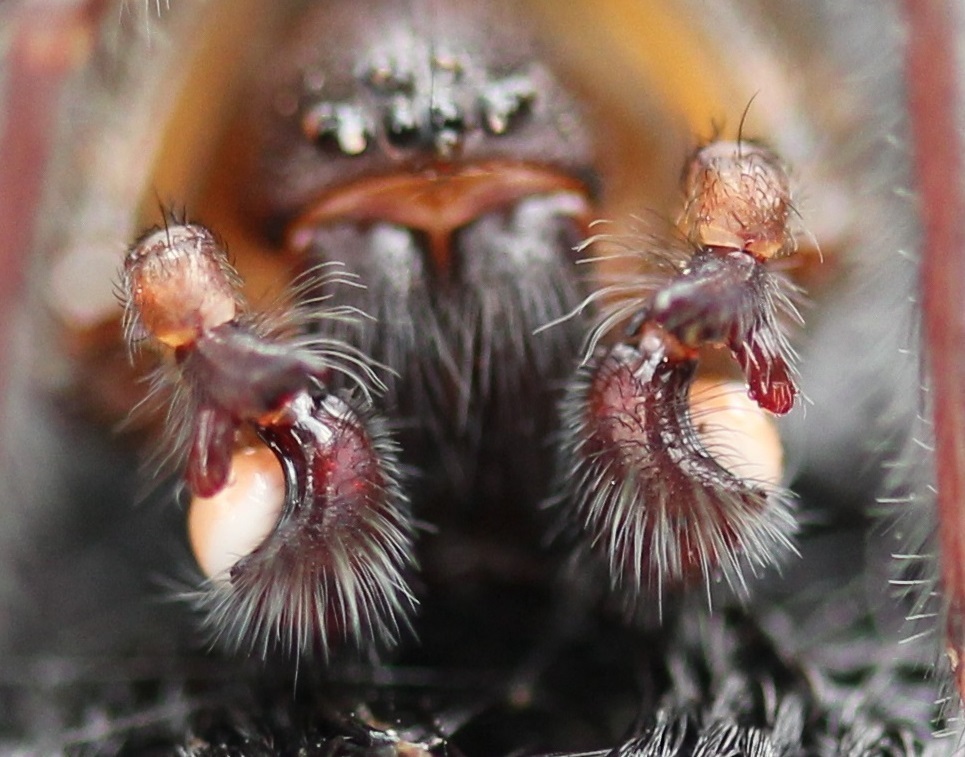
Females are 11 to 16 mm long and males 8 to 10 mm; both are very dark with a skull-like pale marking on the abdomen. They live in dark, moist crevices near buildings and may wander indoors in spring, especially males searching for mates. The spider can bite, producing a mild, wasp-like sting.
Source: Wikipedia
How to recognize it
The spider is very dark, black, brown, dark red, or tan, with a rounded abdomen that has light yellow markings forming a skull-like pattern.
Source: Wikipedia
Size
Females measure about 11 to 16 mm, while males are smaller at 8 to 10 mm.
Source: Wikipedia
Is it a pest in the house?
It is commonly found near man-made structures. It likes dark, moist crevices such as under stones, logs, or in cellars and dilapidated walls.
Source: Wikipedia
Does it bite or sting?
The species has been known to bite people. A documented bite caused immediate dull, mild pain comparable to a wasp sting.
Source: Wikipedia
Where it lives
It prefers dark, moist spots such as under logs, inside cellars, or in crevices beneath stones and dilapidated walls near human structures. Adult males often enter homes in spring while searching for mates; females can be found indoors or outdoors year-round.
Source: Wikipedia
Life cycle
Spiderlings leave the mother’s nest at different times within a clutch. The mother stays close to the egg sac for about three weeks during incubation.
Source: Wikipedia
When you see it
Males are most likely to be seen indoors during spring, while females may appear any time of year.
Source: Wikipedia
Where it comes from
Native to Europe, it has been introduced to all three North American countries and parts of eastern Europe such as Turkey.
Source: Wikipedia
Where it is found in the US
Recorded in 28 of 51 states and DC. Most records: Pennsylvania, New York, Ohio, Massachusetts, Maryland, Virginia, Michigan, New Jersey.
Darker = more records. Counts are museum and citizen-science records, not population size.
Source: GBIF
Months it is reported in the US
Source: GBIF
More photos


Questions people ask
Where might I find them in my house?
Look in dark, moist places such as cellars, under logs, or in crevices behind walls, especially in spring when males wander indoors.
Source: Wikipedia
Are they native to my area?
They are native to Europe but have been introduced to North America and parts of eastern Europe.
Source: Wikipedia
Sources
- Wikipedia: https://en.wikipedia.org/wiki/Amaurobius_ferox
Look it up elsewhere: GBIF · iNaturalist · BugGuide · ITIS · Wikipedia
Text written 2026-10-23 from the sources above and checked sentence by sentence against them. Data fetched 2026-10-23.