 Bug FAQ
Black Kelp Fly
Coelopa frigida · Order: Diptera · Family: Coelopidae
Also called: Kelp fly
Source: Wikipedia
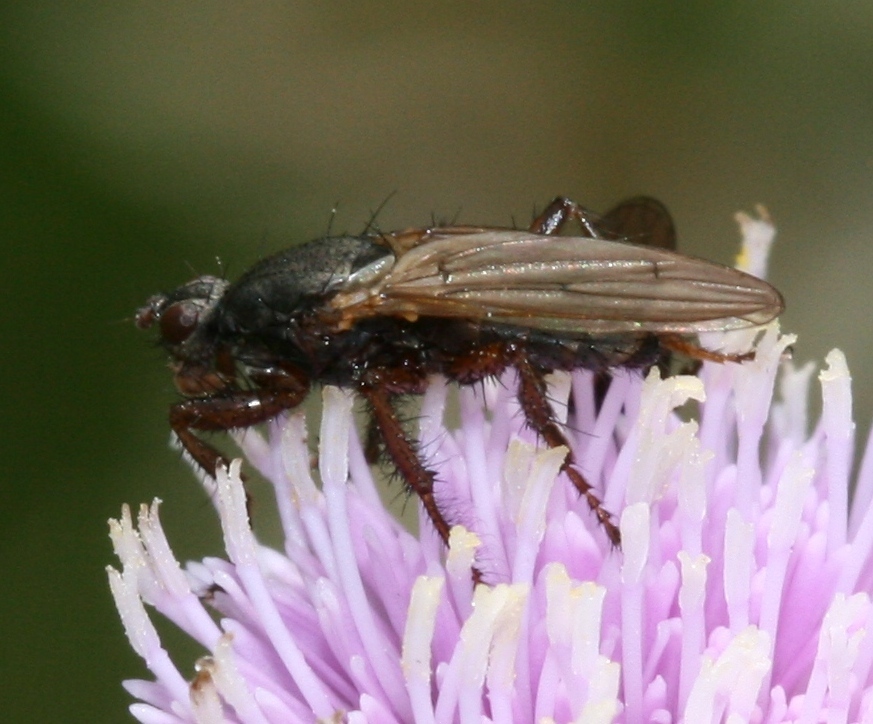
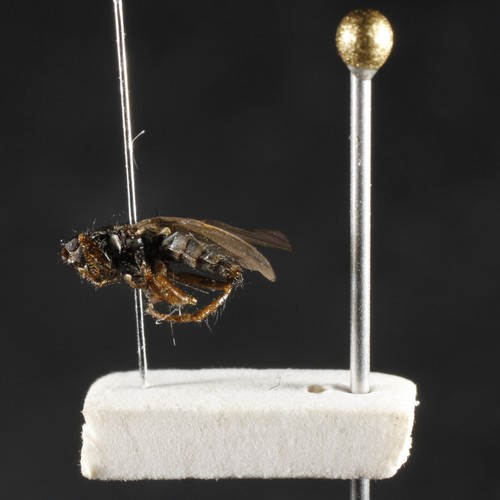
Black kelp flies are light brown to black with yellow specks and have uniformly sized legs that differ only in color. They live on coastal beaches with stranded seaweed, feed on that seaweed and the bacteria coating dead kelp, and complete a 30-day life cycle before emerging as adults ready to fly. Blooms of these flies on temperate Northern Hemisphere shores, especially after climate change, annoy beachgoers and can be blown inland.
Source: Wikipedia
How to recognize it
The legs are all the same size, differing only in color.
Source: Wikipedia
Size
Adults are small flies with bodies colored from light brown to black.
Source: Wikipedia
Is it a pest in the house?
Climate change has increased their blooms, worsening the pest problem for beachgoers.
Source: Wikipedia
Where it lives
They prefer coastal beaches where seaweed has washed ashore.
Source: Wikipedia
What it eats
Adults feed mainly on seaweed that has washed up onto beaches. Larvae consume the bacteria that coat dead kelp.
Source: Wikipedia
Life cycle
The whole life cycle lasts about 30 days.
Source: Wikipedia
When you see it
They bloom along shores, creating a pest problem for beachgoers. These aggregations can annoy beachgoers and may be blown inland to city dwellers.
Source: Wikipedia
Lookalikes
Coelopa nebularum is a close cousin or possible subspecies of this fly.
Source: Wikipedia
Where it is found in the US
Recorded in 5 of 51 states and DC. Most records: Alaska, Massachusetts, Maine, Florida, New Hampshire.
Darker = more records. Counts are museum and citizen-science records, not population size.
Source: GBIF
Status: native in North America; native in Canada. Source: iNaturalist
Months it is reported in the US
Source: GBIF
More photos
Questions people ask
What do black kelp flies eat?
Adults feed on seaweed washed up on beaches, while the larvae eat the bacteria on dead kelp.
Source: Wikipedia
How long does their life cycle take?
Their life cycle is about 30 days, ending when adults emerge ready to fly and mate.
Source: Wikipedia
Why are they a problem on beaches?
Blooms of these flies annoy and pest beachgoers, especially as climate change increases their numbers.
Source: Wikipedia
Which other flies look similar?
They are similar to Coelopa nebularum, a close cousin, and other seaweed flies such as Coelopa pilipes.
Source: Wikipedia
Same family (Coelopidae)

Sources
- Wikipedia: https://en.wikipedia.org/wiki/Coelopa_frigida
Look it up elsewhere: GBIF · iNaturalist · BugGuide · ITIS · Wikipedia
Text written 2026-10-29 from the sources above and checked sentence by sentence against them. Data fetched 2026-10-29.