 Bug FAQ
Black-headed Cardinal Beetle
Pyrochroa coccinea · Order: Coleoptera · Family: Pyrochroidae
Also called: Cardinal beetle
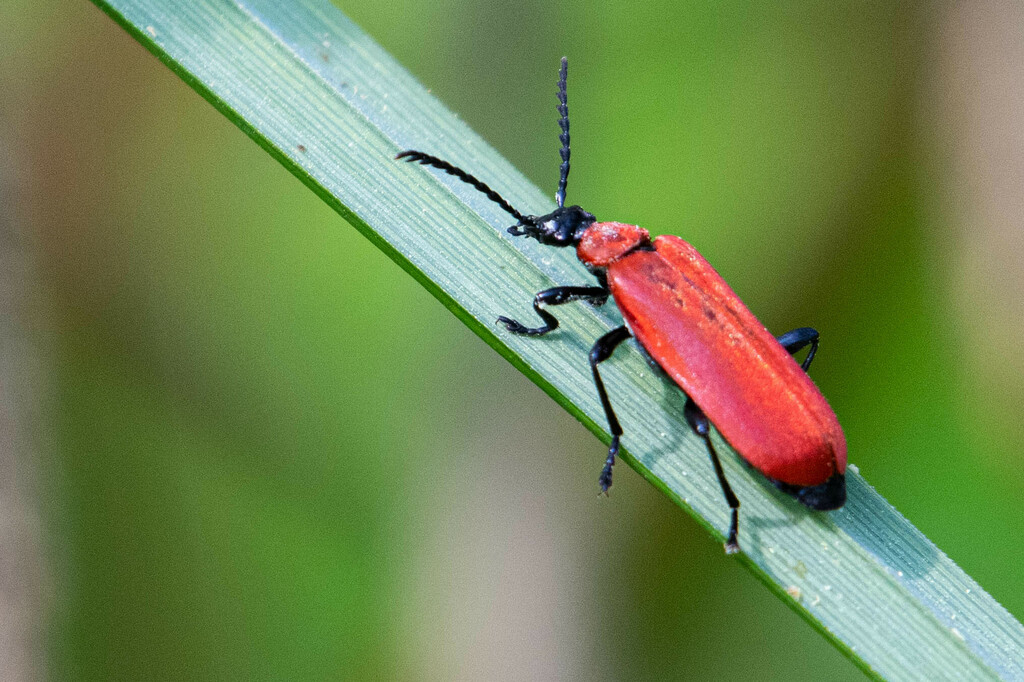
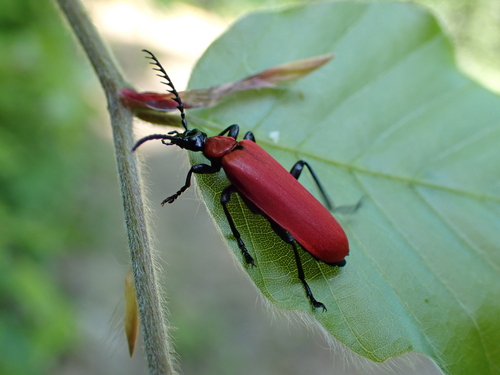
The black-headed cardinal beetle is a large beetle, 14 to 20 mm long, with a black head, feathery antennae and bright red or scarlet pronotum and elytra. Adults appear in spring, are most common in May and June, and feed on small insects, flowers and pollen, while larvae live in decaying wood and feed on dead insects and microorganisms.
Source: Wikipedia
How to recognize it
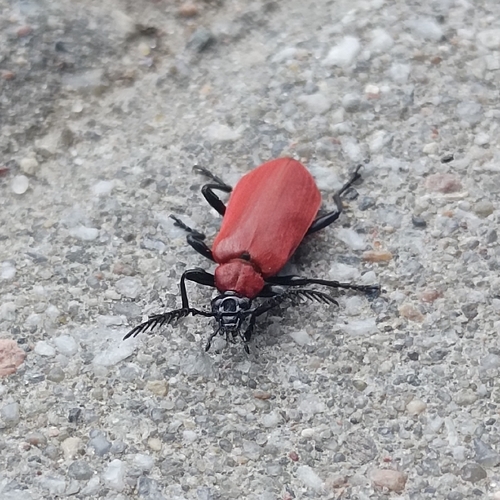
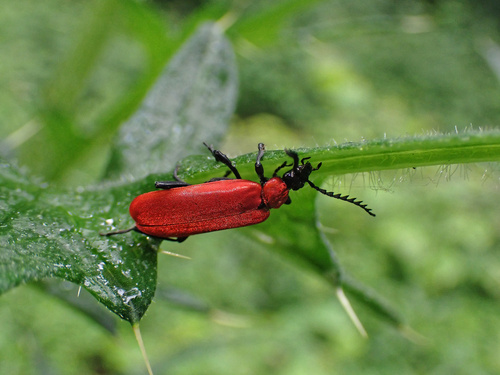
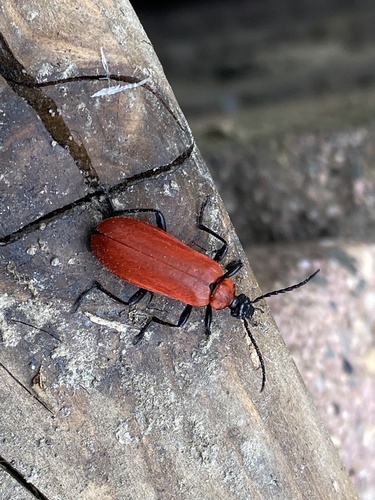
It has a black head with feathery antennae and bright red or scarlet, smooth pronotum and elytra.
Source: Wikipedia
Size
Adults measure about 14 to 20 mm in length.
Source: Wikipedia
Where it lives
It is found in wooded areas and pastures and does not prefer any particular tree species.
Source: Wikipedia
What it eats
Larvae live in groups in decaying wood, eating dead insects, their own faeces and microorganisms. Adults are predators of small insects and also feed on flowers and pollen.
Source: Wikipedia
Life cycle
Larvae develop over several years, so many generations can coexist in the same area. Larvae are present year-round and usually pupate in spring.
Source: Wikipedia
When you see it
Adults emerge in April, peak in May and June, decline in July and are rare the rest of the year.
Source: Wikipedia
Lookalikes
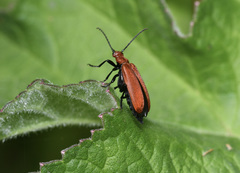
It differs from the red-headed common cardinal beetle by having a black head, feathery antennae, larger size and a deeper blood-red colour.
Source: Wikipedia
More photos
Questions people ask
When are black-headed cardinal beetles most likely to be seen?
They appear in April, are most common in May and June, and become rare after July.
Source: Wikipedia
Same family (Pyrochroidae)
Sources
- Wikipedia: https://en.wikipedia.org/wiki/Cardinal_beetle
Look it up elsewhere: GBIF · iNaturalist · BugGuide · Wikipedia
Text written 2026-10-22 from the sources above and checked sentence by sentence against them. Data fetched 2026-10-22.