 Bug FAQ
Black earwig
Chelisoches morio · Order: Dermaptera · Family: Chelisochidae
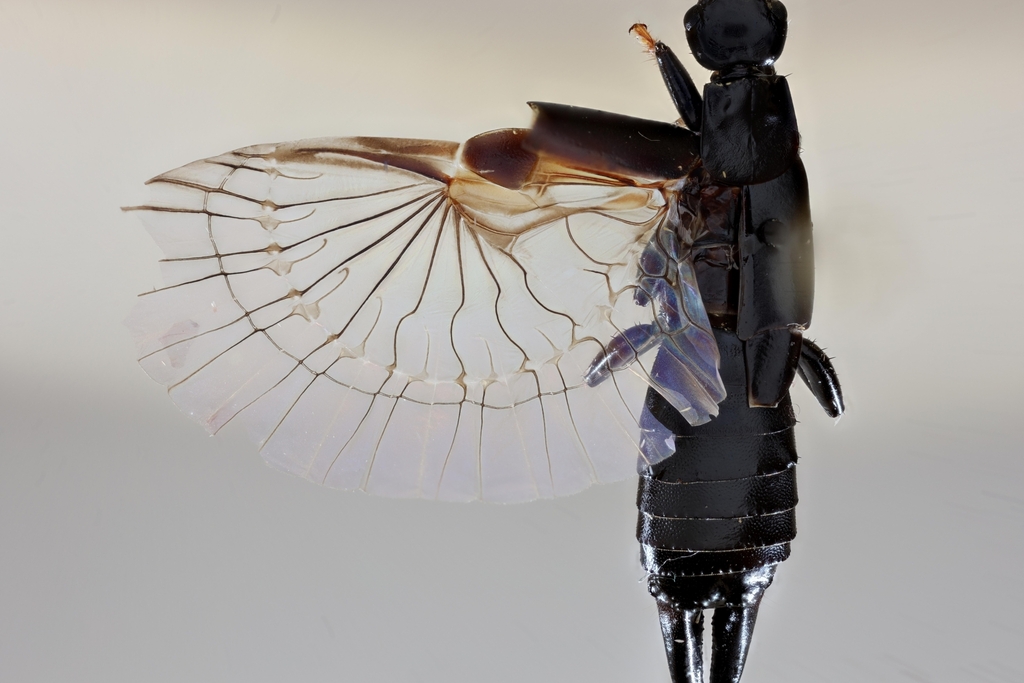
Adult black earwigs are solid black insects that usually measure between 18 and 25 mm, with some individuals reaching up to 36 mm. The species develops through four immature stages, takes about 5 to 7 days to hatch, and is most active at night though it can be seen during the day.
Source: Wikipedia
How to recognize it
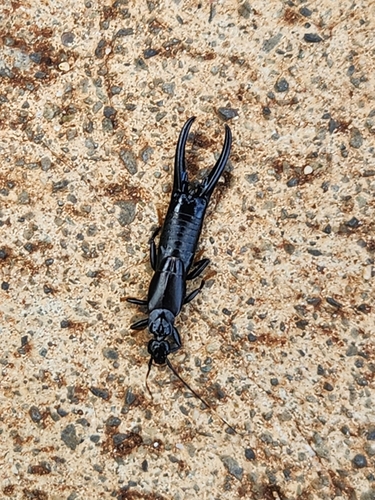
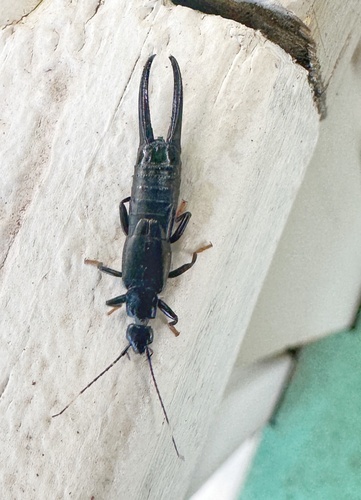
Adults are uniformly jet black, and males can be told apart by their widely spaced, serrated rear appendages.
Source: Wikipedia
Size
Adults normally range from 18 to 25 mm long, but some grow as large as 36 mm.
Source: Wikipedia
Life cycle
The species passes through four instar stages before becoming an adult. Eggs hatch after an incubation period of about five to seven days.
Source: Wikipedia
When you see it
Black earwigs are primarily nocturnal but are also active during daylight hours.
Source: Wikipedia
Where it is found in the US
Recorded in 2 of 51 states and DC. Most records: Hawaii, California.
Darker = more records. Counts are museum and citizen-science records, not population size.
Source: GBIF
Months it is reported in the US
Source: GBIF
More photos
Questions people ask
How big are black earwigs?
Adults are usually 18 to 25 mm long, though some can reach up to 36 mm.
Source: Wikipedia
What do black earwigs look like?
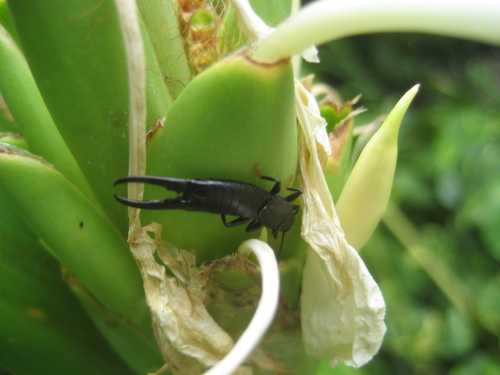
They are solid jet-black and males have widely spaced, serrated cerci at the rear.
Source: Wikipedia
When are they active?
They are most active at night but can also be seen during the day.
Source: Wikipedia
Sources
- Wikipedia: https://en.wikipedia.org/wiki/Chelisoches_morio
Look it up elsewhere: GBIF · iNaturalist · BugGuide · ITIS · Wikipedia
Text written 2026-10-23 from the sources above and checked sentence by sentence against them. Data fetched 2026-10-23.