 Bug FAQ
Big-eyed Toad Bug
Gelastocoris oculatus · Order: Hemiptera · Family: Gelastocoridae
Also called: toad bug
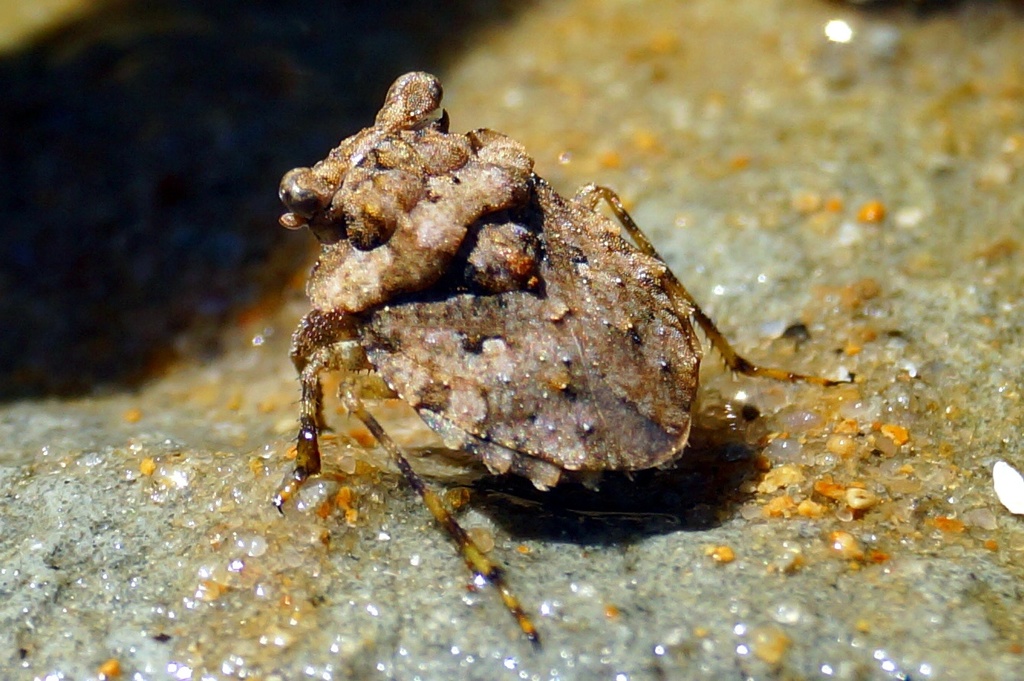
The big-eyed toad bug lives near freshwater shores and prefers damp sand or mud, where it blends in with the substrate. Adults and nymphs catch smaller insects by jumping on them and feeding with piercing-sucking mouthparts; they lay eggs under rocks or in sand and have five nymphal stages.
Source: Wikipedia
How to recognize it
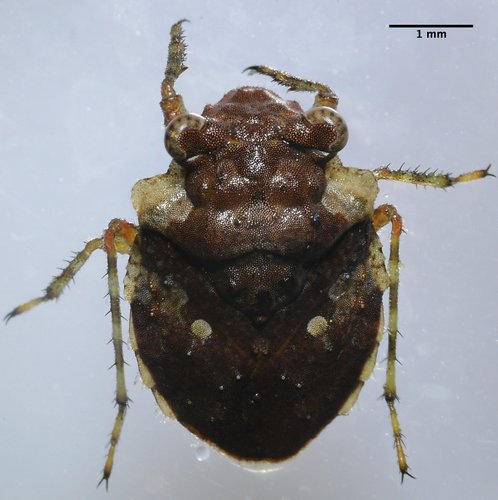
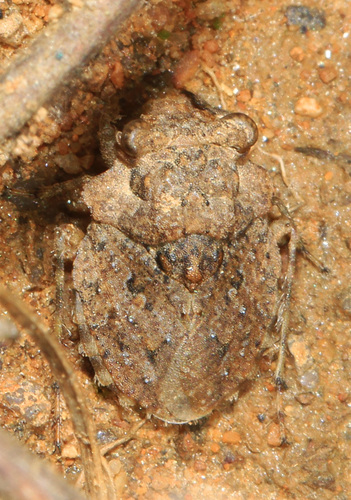
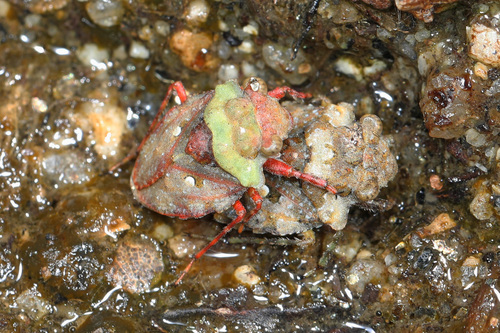
Its colors, shape, and hopping look like a toad, which helps it hide in sand or pebble habitats.
Source: Wikipedia
Where it lives
It is a riparian insect found along the edges of lakes, ponds, and streams. It prefers moist but not fully saturated ground.
Source: Wikipedia
What it eats
Both adults and nymphs hunt and eat smaller insects by jumping on them and using their piercing-sucking mouthparts.
Source: Wikipedia
Life cycle
They are most active from spring through autumn; those in northern areas hibernate in winter.
Source: Wikipedia
When you see it
Activity peaks from spring to autumn, with northern populations entering hibernation.
Source: Wikipedia
Where it comes from
It occurs in Central America and across North America, reaching into 28 U.S. states and three Canadian provinces north of Mexico.
Source: Wikipedia
Lookalikes
Its appearance and hopping behavior can be mistaken for a small toad.
Source: Wikipedia
Where it is found in the US
Recorded in 40 of 51 states and DC. Most records: California, Maryland, Texas, Indiana, Illinois, Oklahoma, Virginia, Ohio.
Darker = more records. Counts are museum and citizen-science records, not population size.
Source: GBIF
Status: native in North America; native in United States; native in Canada. Source: iNaturalist
Months it is reported in the US
Source: GBIF
More photos

Sources
- Wikipedia: https://en.wikipedia.org/wiki/Gelastocoris_oculatus
Look it up elsewhere: GBIF · iNaturalist · BugGuide · ITIS · Wikipedia
Text written 2026-10-22 from the sources above and checked sentence by sentence against them. Data fetched 2026-10-22.