 Bug FAQ
Baltic Isopod
Idotea balthica · Order: Isopoda · Family: Idoteidae
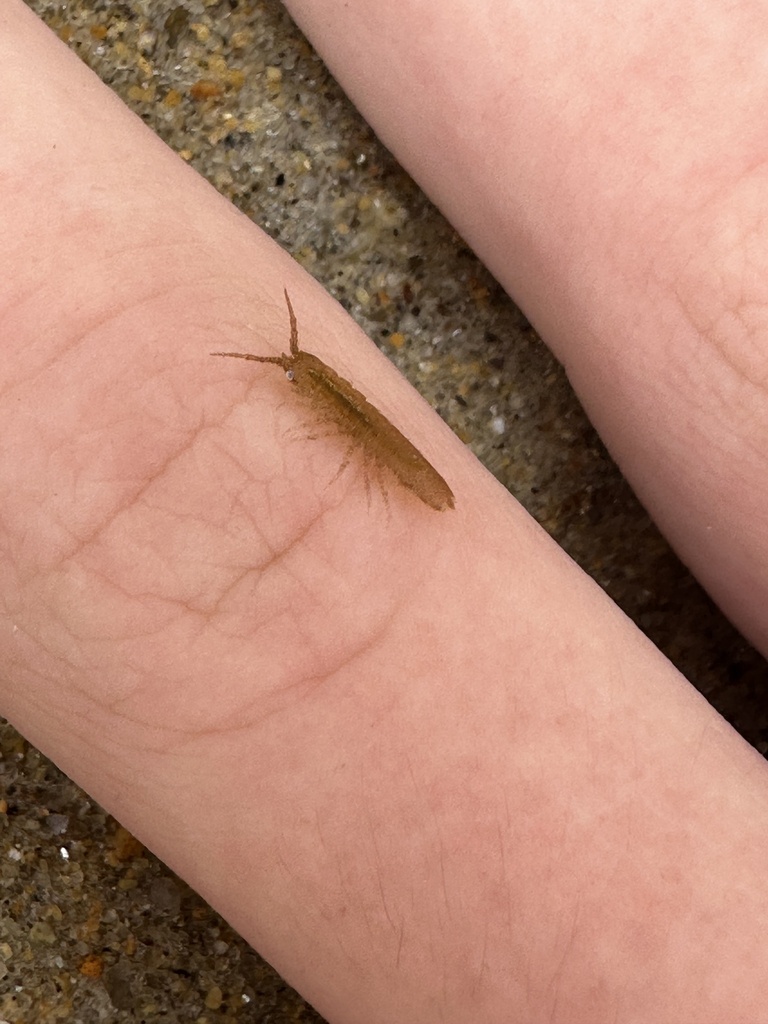
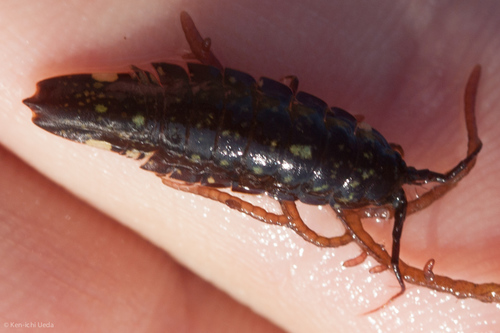
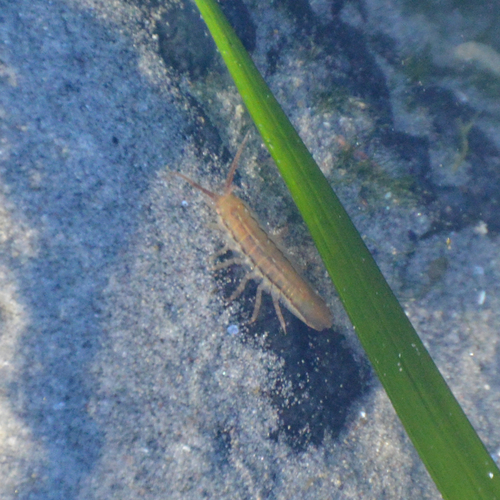
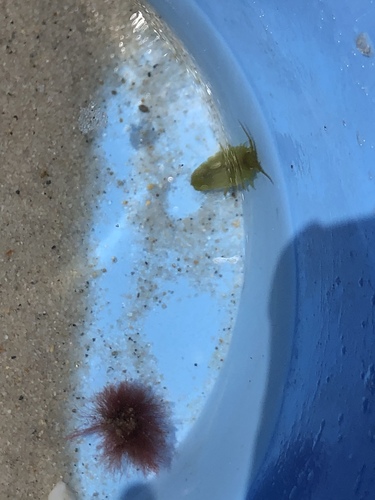
Male Baltic isopods grow up to about 4 cm while females reach roughly 1.8 cm. They are most often light-green in males and darker, sometimes black-silver, in females. In the Baltic they prefer the seaweed Fucus vesiculosus as food and habitat.
Source: Wikipedia
How to recognize it
The telson is dorsally keeled with straight sides and ends in a distinct protrusion, which sets this species apart from other idoteids. Males are usually light green, while females tend to be darker, ranging from muted greens to black-silver patterns.
Source: Wikipedia
Size
Males can reach about 4 cm in length, whereas females grow to a maximum of around 1.8 cm.
Source: Wikipedia
What it eats
Adults eat a variety of algae and aquatic plants, especially brown algae like Fucus and green algae such as Ulva. In the Baltic, they show a preference for the seaweed Fucus vesiculosus over other algae and vascular plants.
Source: Wikipedia
Life cycle
They choose habitats by balancing predator risk with food availability. Adults prioritize avoiding predators more than juveniles when selecting microhabitats.
Source: Wikipedia
When you see it
During the mating season, males compete with each other for access to females. Males grow faster when fed the apical parts of Fucus vesiculosus, while females grow equally well on both apical and basal parts.
Source: Wikipedia
Where it comes from
It is recorded from the North Atlantic coasts of Europe and North America, including the British Isles, Norway, the Baltic Sea, the Gulf of Maine and the Black Sea.
Source: Wikipedia
Lookalikes
The unique shape of the telson, dorsally keeled with straight sides and a terminal protrusion, helps tell this species apart from other idoteids.
Source: Wikipedia
Where it is found in the US
Recorded in 12 of 51 states and DC. Most records: Massachusetts, Maine, Rhode Island, New York, New Jersey, Connecticut, New Hampshire, Virginia.
Darker = more records. Counts are museum and citizen-science records, not population size.
Source: GBIF
Months it is reported in the US
Source: GBIF
More photos
Questions people ask
How can I tell a Baltic isopod apart from other similar crustaceans?
Look at the telson; it is dorsally keeled with straight sides and ends in a distinct protrusion, which is unique to this species.
Source: Wikipedia
What size are male and female Baltic isopods?
Males can grow up to about 4 cm, while females reach up to roughly 1.8 cm.
Source: Wikipedia
What do Baltic isopods eat in the Baltic Sea?
They mainly feed on the seaweed Fucus vesiculosus, preferring it over other algae and plants.
Source: Wikipedia
Where are Baltic isopods found?
They have been recorded across European waters and the North Atlantic, including the British Isles, Norway, the Baltic Sea, the Gulf of Maine and the Black Sea.
Source: Wikipedia
Same family (Idoteidae)
Sources
- Wikipedia: https://en.wikipedia.org/wiki/Idotea_balthica
Look it up elsewhere: GBIF · iNaturalist · BugGuide · ITIS · Wikipedia
Text written 2026-10-24 from the sources above and checked sentence by sentence against them. Data fetched 2026-10-24.