 Bug FAQ
Aztec Dancer
Argia nahuana · Order: Odonata · Family: Coenagrionidae
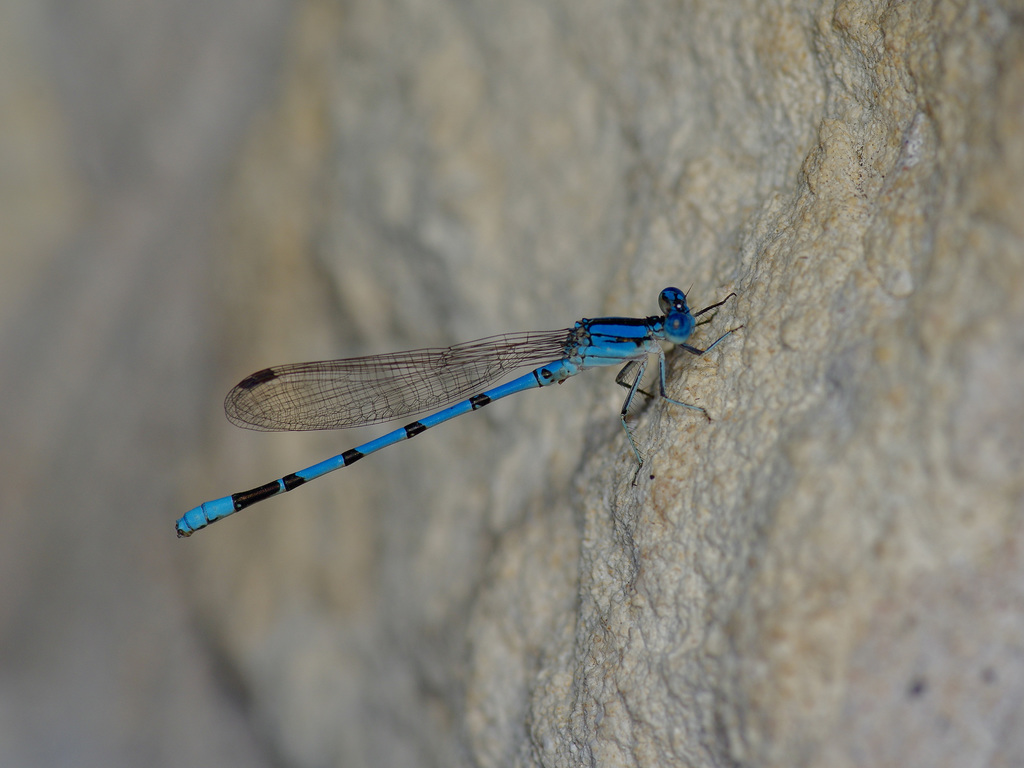
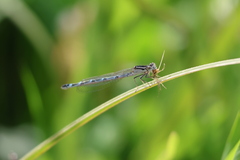
The Aztec Dancer damselfly has a forked black stripe on its thorax and blue markings on its eyes, legs, and abdomen. It lives in sunny, clear, shallow streams in the Southwest US and Mexico, preferring minimal vegetation along the water.
Source: Wikipedia
How to recognize it
A dark black stripe runs along the side of the thorax and splits like a fork from front to back.
Source: Wikipedia
Where it lives
Common in the Southwest, especially in Mexico and US states such as California, Arizona, Texas, and Kansas. Found in clear, shallow streams with lots of sun and little plant cover along the banks.
Source: Wikipedia
When you see it
First recorded in 1894, with 115 sightings up to 1975 and 35 sightings after 1980.
Source: Wikipedia
Where it comes from
Its range is centered in the Southwest, covering parts of Mexico and the listed US states.
Source: Wikipedia
Lookalikes
Often mistaken for other Argia species such as A. agrioides, A. leonorae, A. fumipennis, and A. hinei. It was once thought to be a variation of the California dancer (A. agrioides) until recognized as its own species in 1958.
Source: Wikipedia
Where it is found in the US
Recorded in 13 of 51 states and DC. Most records: Texas, Arizona, New Mexico, California, Oklahoma, Nevada, Colorado, Kansas.
Darker = more records. Counts are museum and citizen-science records, not population size.
Source: GBIF
Months it is reported in the US
Source: GBIF
More photos
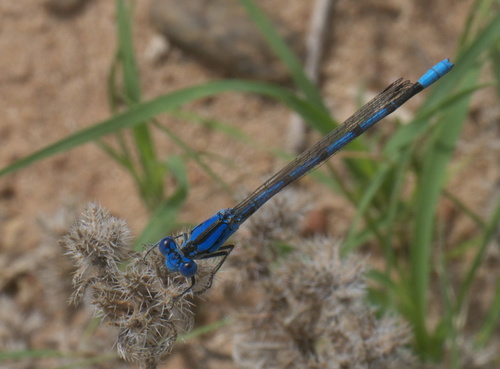
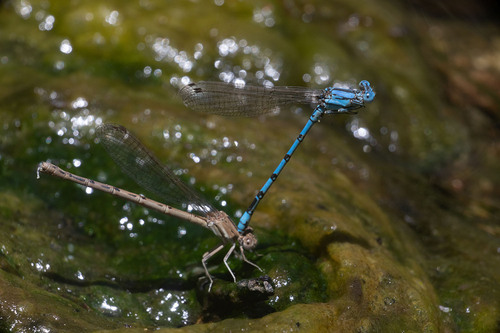
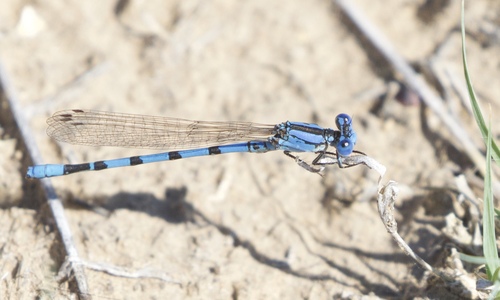
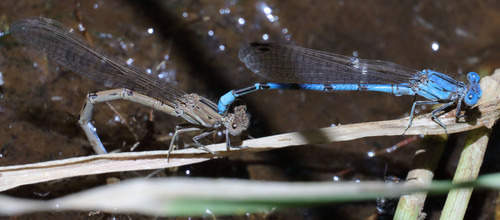
Same family (Coenagrionidae)
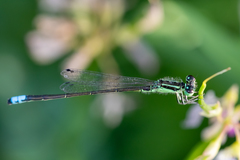
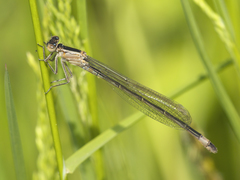

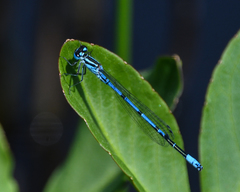

Sources
- Wikipedia: https://en.wikipedia.org/wiki/Aztec_dancer
Look it up elsewhere: GBIF · iNaturalist · BugGuide · ITIS · Wikipedia
Text written 2026-10-22 from the sources above and checked sentence by sentence against them. Data fetched 2026-10-22.