 Bug FAQ
Aurora Bluetail
Ischnura aurora · Order: Odonata · Family: Coenagrionidae
Also called: Golden Dartlet, Gossamer Damselfly
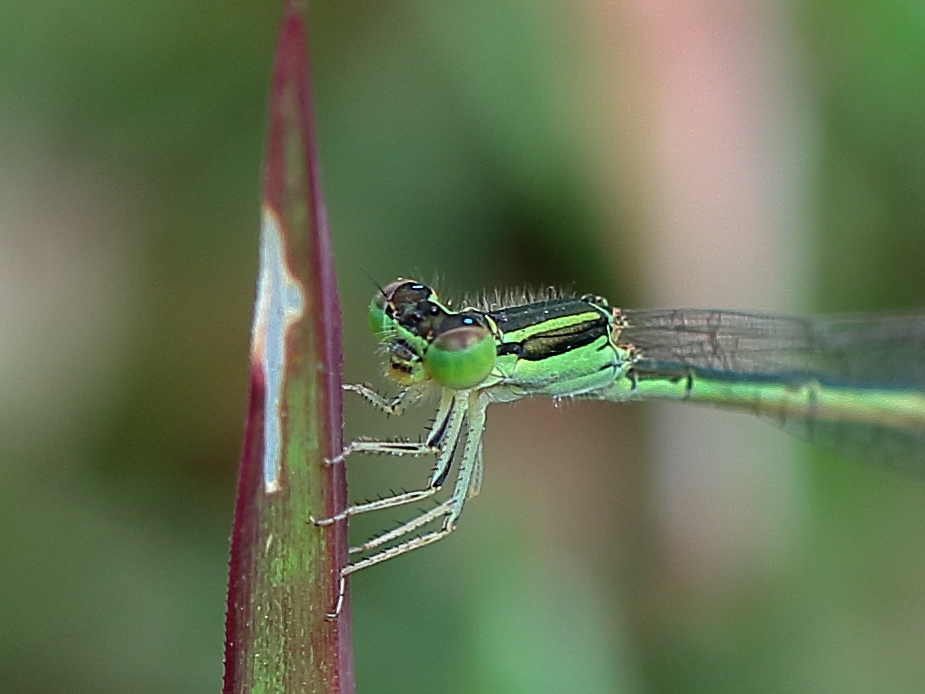
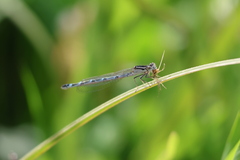
The Aurora Bluetail is a small damselfly with apple-green body, black thoracic stripes and a blue-tipped yellow tail. A similar form in the Indian subcontinent and Iran is now treated as a separate species, Ischnura rubilio.
Source: Wikipedia
How to recognize it
Males have black eyes with a half-moon cap, olive-green below, two azure spots behind the eyes, a black thorax with pale green stripes, pale greenish-white legs with a vertical stripe on the femur, transparent wings with rose-red spots on forewings and pale grey on hindwings, and a bright reddish-yellow abdomen with specific black marks and blue on the eighth and ninth segments. Females have brown half-moon caps on the eyes, green below, a black thorax with orange stripes, pale green sides, pale white legs with vertical black femur stripes, and a broad black dorsal stripe on the abdomen without azure blue markings on the last three segments.
Source: Wikipedia
Where it lives
Found among vegetation along pond, river, canal, marsh and wet rice-field banks.
Source: Wikipedia
Lookalikes
The form in the Indian subcontinent and Iran is now considered a different species, Ischnura rubilio.
Source: Wikipedia
Same family (Coenagrionidae)


Sources
- Wikipedia: https://en.wikipedia.org/wiki/Ischnura_aurora
Look it up elsewhere: GBIF · iNaturalist · BugGuide · Wikipedia
Text written 2026-10-22 from the sources above and checked sentence by sentence against them. Data fetched 2026-10-22.