 Bug FAQ
Asian Citrus Psyllid
Diaphorina citri · Order: Hemiptera · Family: Liviidae
Source: Wikipedia
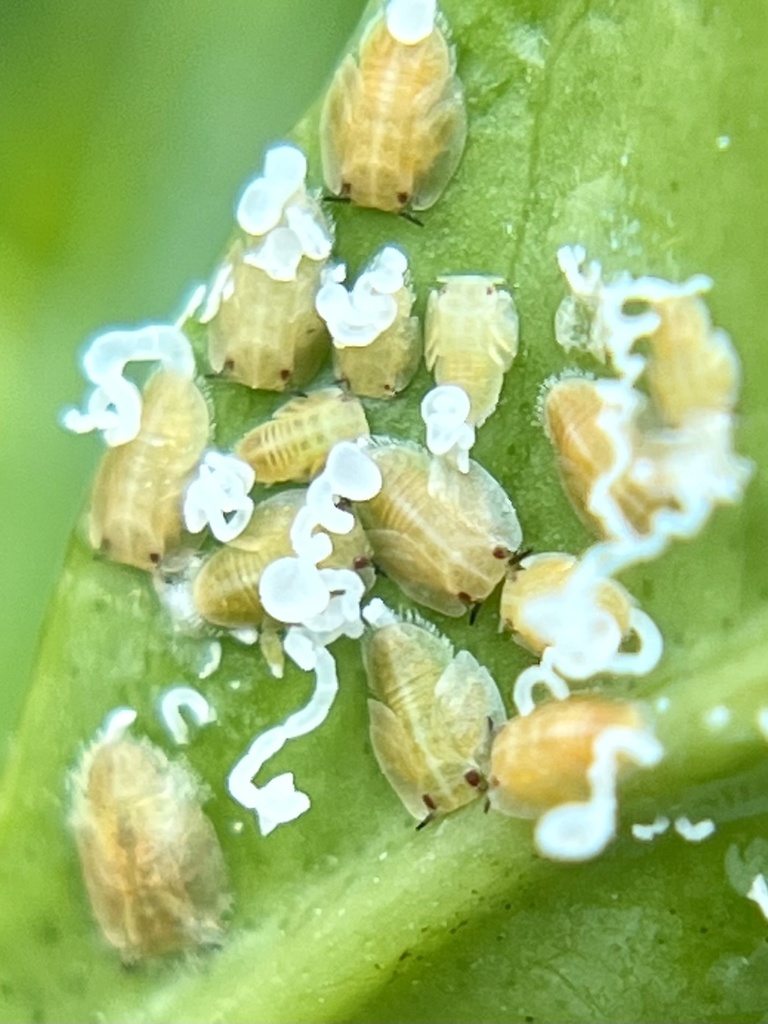
The Asian citrus psyllid is a small, about 4 mm long insect with a dusty wax coating and distinctive wing edges. It originated in southern Asia and has spread to several U.S. states, where its nymphs live on new citrus shoots. Both adults and nymphs can transmit the bacteria that cause citrus greening disease, damaging citrus trees.
Source: Wikipedia
How to recognize it
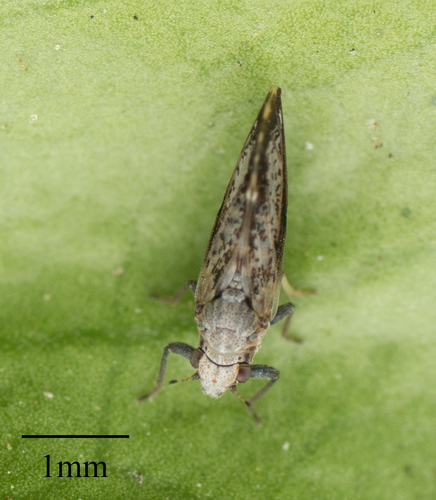
The insect is covered in a whitish, waxy dust that makes it look powdery. Its forewings are broadest at the rear with a dark edge and a pale gap near the tip.
Source: Wikipedia
Size
Adults are about four millimetres long and have a fawn-brown mottled body. Eggs are roughly 0.3 mm, almond-shaped and taper toward the tip.
Source: Wikipedia
Is it a pest in the house?
Feeding produces a toxin that kills or deforms plant tips, preventing normal leaf expansion.
Source: Wikipedia
How to get rid of it
- Natural enemies such as hoverflies, lacewings, ladybirds and parasitic wasps help control its populations.
- Both adults and nymphs can be managed with a variety of insecticides.
Source: Wikipedia
Where it lives
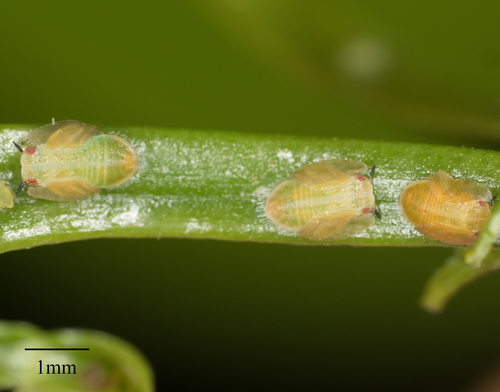
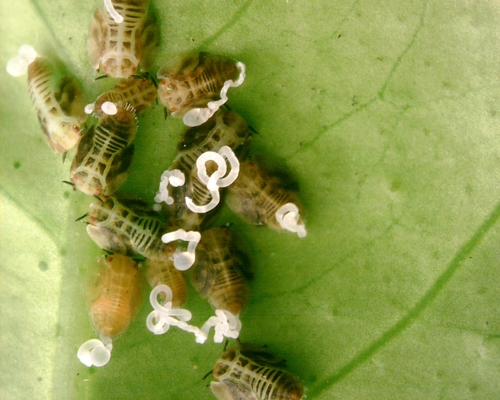
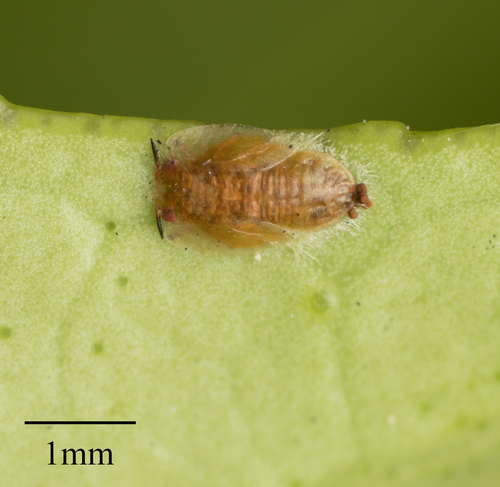
Nymphs are found on the new shoots of citrus trees.
Source: Wikipedia
What it eats
When feeding, it can transmit the bacteria that cause citrus greening disease.
Source: Wikipedia
Life cycle
Nymphs molt five times before becoming adults. The whole development from egg to adult takes two to seven weeks, depending on temperature and season.
Source: Wikipedia
Where it comes from
The species originated in Asia.
Source: Wikipedia
Lookalikes
It usually holds its head down and tail up while sucking sap. Unlike sedentary aphids, psyllids are active jumpers, which helps tell them apart.
Source: Wikipedia
Where it is found in the US
Recorded in 8 of 51 states and DC. Most records: California, Florida, Alabama, Hawaii, Texas, Louisiana, Kansas, Arizona.
Darker = more records. Counts are museum and citizen-science records, not population size.
Source: GBIF
Months it is reported in the US
Source: GBIF
More photos
Questions people ask
How can I control Asian citrus psyllid?
Use insecticides that target both adults and nymphs, and encourage natural predators like hoverflies and ladybirds.
Source: Wikipedia
What damage does the Asian citrus psyllid cause?
It spreads the bacteria that cause citrus greening disease and its feeding releases a toxin that kills or deforms citrus shoot tips.
Source: Wikipedia
How do I tell Asian citrus psyllid apart from aphids?
Psyllids hold their heads down and tails up, are active jumpers, and have a dusty wax coating, whereas aphids are sedentary.
Source: Wikipedia
Where is Asian citrus psyllid found?
It originated in southern Asia and now occurs in many citrus-growing regions, including several U.S. states such as Florida, California, and Texas.
Source: Wikipedia
Sources
- Wikipedia: https://en.wikipedia.org/wiki/Diaphorina_citri
Look it up elsewhere: GBIF · iNaturalist · BugGuide · ITIS · Wikipedia
Text written 2026-10-26 from the sources above and checked sentence by sentence against them. Data fetched 2026-10-26.