 Bug FAQ
Arrowhead Spiketail
Cordulegaster obliqua · Order: Odonata · Family: Cordulegastridae
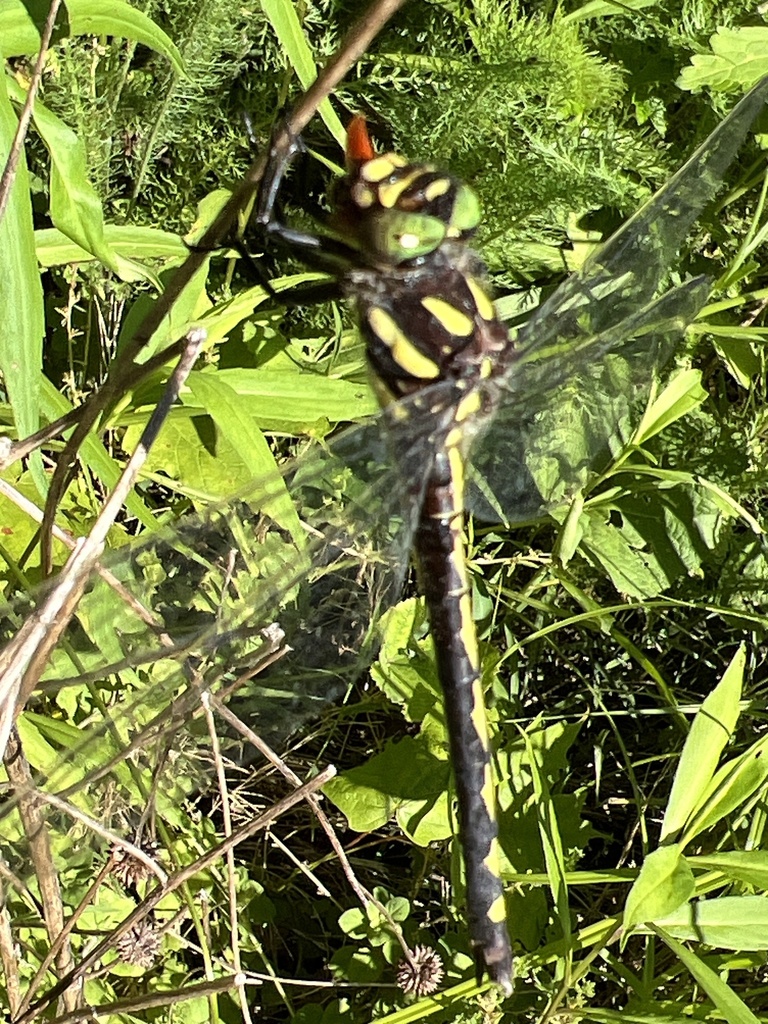
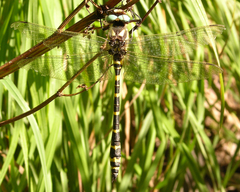
The arrowhead spiketail (Cordulegaster obliqua) is a dragonfly species in the family Cordulegastridae. It lives in North America, typically in clearings near small rivers and streams, and its larvae develop in intermittent streams where they may remain for up to five years before emerging as adults in early summer. The species is listed as Least Concern by the IUCN, indicating no immediate threat to its survival.
Source: Wikipedia
Where it lives
It is found near small rivers and streams, often in clearings. Larvae live in intermittent streams.
Source: Wikipedia
Life cycle
Larvae can stay in streams for up to five years before emerging as adults.
Source: Wikipedia
When you see it
Adults emerge in early summer.
Source: Wikipedia
Where it comes from
It is native to North America.
Source: Wikipedia
Where it is found in the US
Recorded in 23 of 51 states and DC. Most records: Michigan, Indiana, Ohio, Virginia, Texas, Illinois, Kansas, Tennessee.
Darker = more records. Counts are museum and citizen-science records, not population size.
Source: GBIF
Status: native in North America; native in United States; native in Canada. Source: iNaturalist
Months it is reported in the US
Source: GBIF
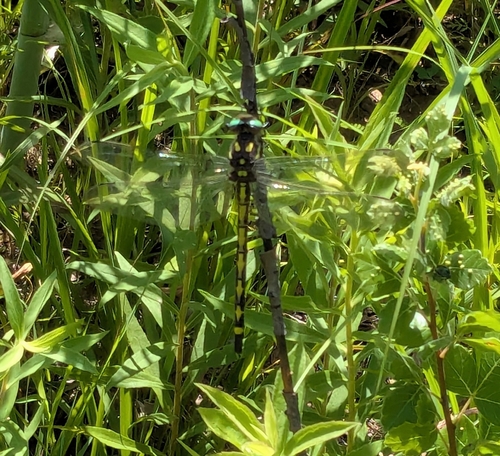
More photos
Questions people ask
How long do arrowhead spiketail larvae stay in the water?
The larvae may live up to five years in intermittent streams before becoming adults.
Source: Wikipedia
Same family (Cordulegastridae)
Sources
- Wikipedia: https://en.wikipedia.org/wiki/Zoraena_obliqua
Look it up elsewhere: GBIF · iNaturalist · BugGuide · Wikipedia
Text written 2026-10-26 from the sources above and checked sentence by sentence against them. Data fetched 2026-10-26.