 Bug FAQ
Antlered Flutter Fly
Toxonevra superba · Order: Diptera · Family: Pallopteridae

Adult Antlered Flutter Flies are yellowish-brown and measure about 3 to 6 mm long. They live in moist, shady places across eastern North America, from Maine and Minnesota down to Georgia and west to Nebraska, and also from Nova Scotia to Alberta.
Source: Wikipedia
How to recognize it
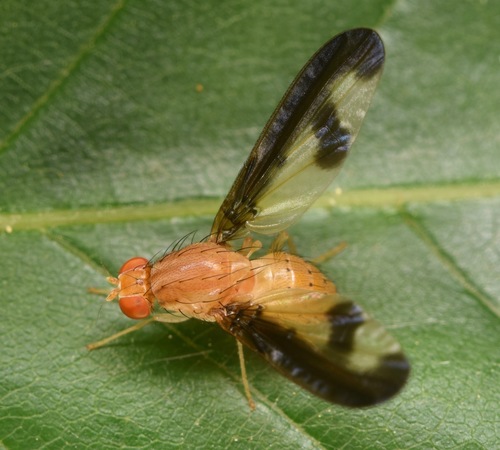
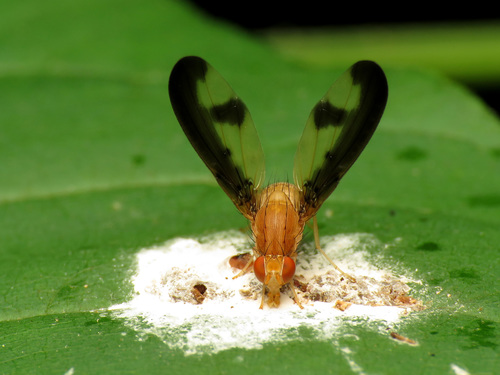
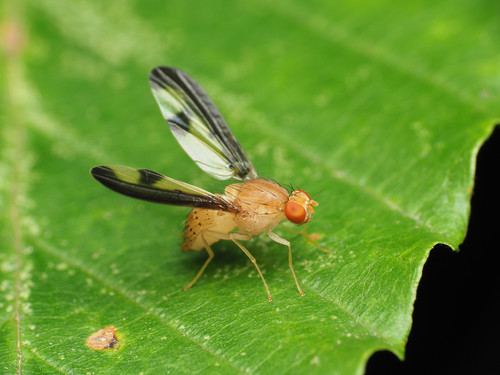
The wings are clear with dark brown antler-shaped markings.
Source: Wikipedia
Size
Adults are 3 to 6 mm long and have a yellowish-brown color.
Source: Wikipedia
Where it lives
They prefer moist, shady environments. Their range extends from Maine and Minnesota to Georgia and Nebraska, and from Nova Scotia to Alberta.
Source: Wikipedia
What it eats
Larvae feed on plants and may also prey on bark-beetle larvae.
Source: Wikipedia
Life cycle
Males extend and vibrate their wings during courtship, similar to other Pallopteridae.
Source: Wikipedia
Where it is found in the US
Recorded in 32 of 51 states and DC. Most records: Pennsylvania, New York, Ohio, Maryland, Virginia, Minnesota, North Carolina, Wisconsin.
Darker = more records. Counts are museum and citizen-science records, not population size.
Source: GBIF
Status: native in North America; native in Canada. Source: iNaturalist
Months it is reported in the US
Source: GBIF
More photos
Questions people ask
What do Antlered Flutter Flies look like?
They are small (3 to 6 mm), yellowish-brown flies with clear wings marked by dark antler-shaped patterns and a thorax that has two pale stripes and rows of bristles.
Source: Wikipedia
Where are Antlered Flutter Flies found?
They live in moist, shady spots across eastern North America, from Maine and Minnesota down to Georgia and west to Nebraska, and from Nova Scotia to Alberta.
Source: Wikipedia
What do the larvae eat?
The larvae feed on plants and may also prey on bark-beetle larvae.
Source: Wikipedia
Sources
- Wikipedia: https://en.wikipedia.org/wiki/Toxonevra_superba
Look it up elsewhere: GBIF · iNaturalist · BugGuide · Wikipedia
Text written 2026-10-23 from the sources above and checked sentence by sentence against them. Data fetched 2026-10-22.