 Bug FAQ
Amelia's Threadtail
Neoneura amelia · Order: Odonata · Family: Coenagrionidae
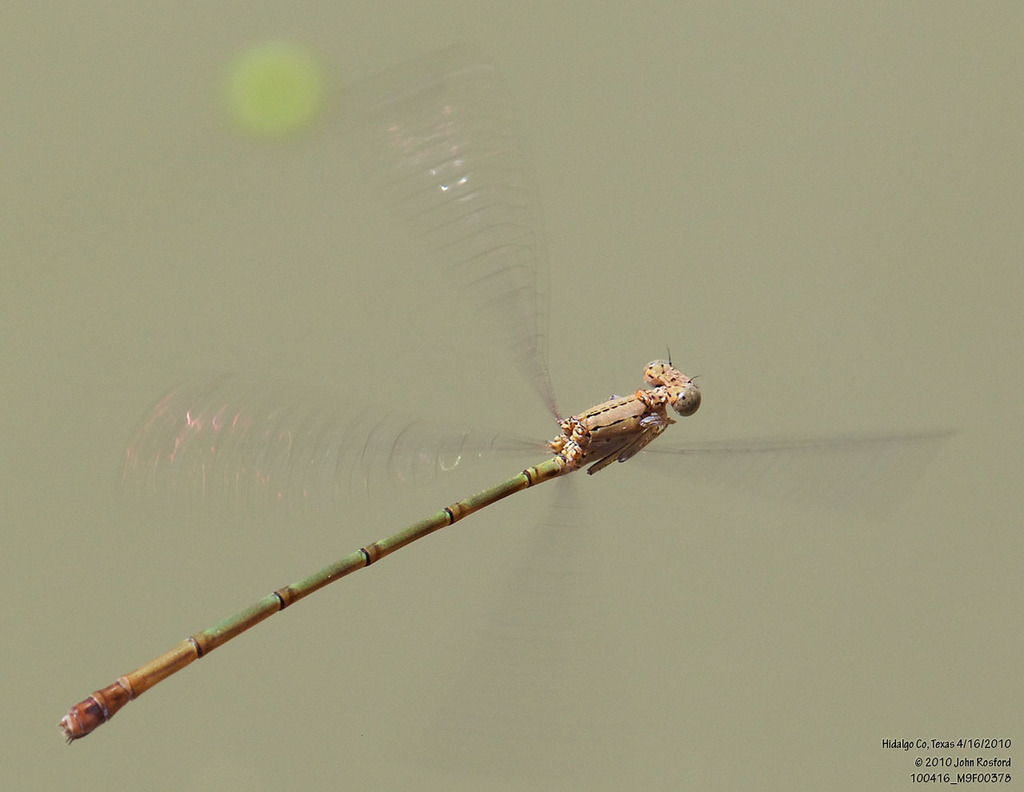
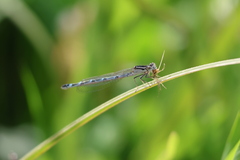
Amelia's Threadtail is a small damselfly about 3 cm long with a wingspan just over 3 cm. It lives near the backwaters of large rivers, streams and pond edges, often in muddy spots, and can be found in both wet and dry forests as well as grasslands.
Source: Wikipedia
How to recognize it
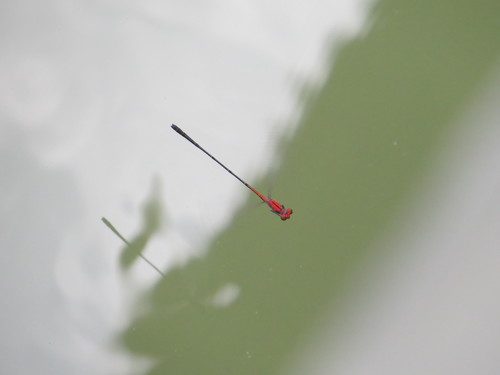
Males have a bright scarlet head, reddish-brown eyes, and a thorax with a scarlet front, thin black stripe on top and dull orange sides; the first three abdominal segments are reddish-orange and the rest are brown with pale bases and dark tips.
Source: Wikipedia
Size
Total length ranges from 29 to 35 mm and wingspan from 32 to 36 mm.
Source: Wikipedia
Where it lives
It also occurs in wet tropical and subtropical forests, dry forests, and grasslands.
Source: Wikipedia
When you see it
In Texas the species is active from April through December.
Source: Wikipedia
Where it is found in the US
Recorded in 1 of 51 states and DC. Most records: Texas.
Darker = more records. Counts are museum and citizen-science records, not population size.
Source: GBIF
Status: native in North America. Source: iNaturalist
Months it is reported in the US
Source: GBIF
More photos
Questions people ask
When can I see Amelia's Threadtail?
In Texas they are on the wing from April to December.
Source: Wikipedia
Where does Amelia's Threadtail live?
It lives near the backwaters of large rivers, streams and pond edges, often in muddy locations, and is found in both wet and dry forests as well as grasslands.
Source: Wikipedia
Same family (Coenagrionidae)


Sources
- Wikipedia: https://en.wikipedia.org/wiki/Neoneura_amelia
Look it up elsewhere: GBIF · iNaturalist · BugGuide · ITIS · Wikipedia
Text written 2026-10-26 from the sources above and checked sentence by sentence against them. Data fetched 2026-10-26.