 Bug FAQ
Allegheny River Cruiser
Macromia alleghaniensis · Order: Odonata · Family: Macromiidae
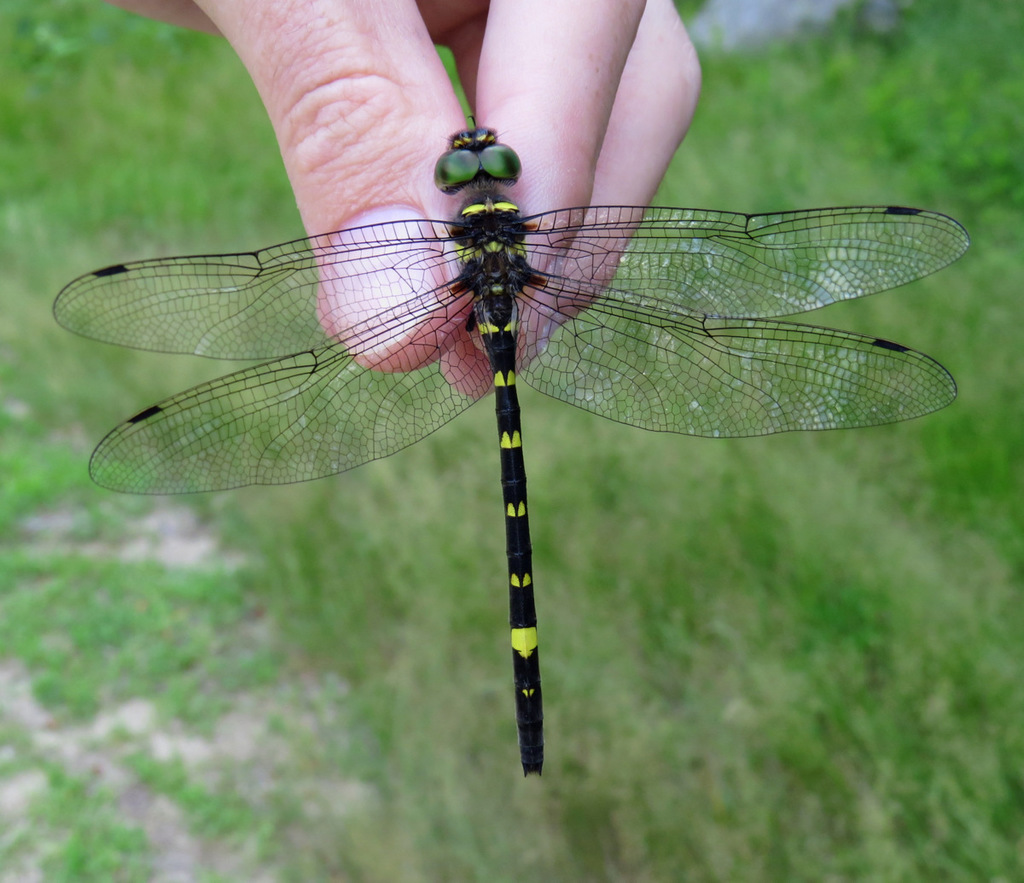
The Allegheny River Cruiser is a dragonfly about 2.6 to 2.8 inches long (66 to 71 mm). It lives on slow-flowing small to medium streams in the central southeastern United States, extending west to southeastern Missouri and south to Texas and the Gulf coast of Mississippi and Alabama.
Source: Wikipedia
How to recognize it
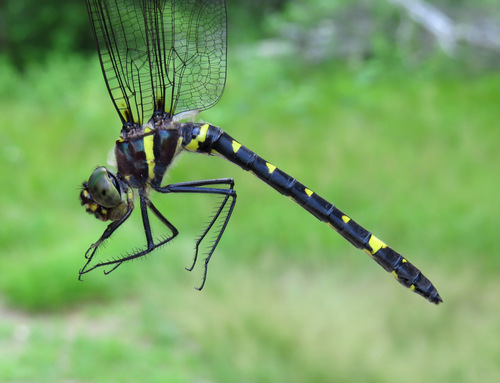
The thorax lacks frontal stripes and the abdomen has yellow spots.
Source: Wikipedia
Where it lives
They are commonly found on slow-flowing small to medium streams.
Source: Wikipedia
Where it comes from
The species occurs in the United States, especially the central southeastern region. Its range reaches west to southeastern Missouri and further into western Arkansas, Oklahoma, Texas, and the Gulf coast of Mississippi and Alabama.
Source: Wikipedia
Where it is found in the US
Recorded in 22 of 51 states and DC. Most records: North Carolina, Tennessee, New Jersey, Virginia, Michigan, Alabama, Georgia, Rhode Island.
Darker = more records. Counts are museum and citizen-science records, not population size.
Source: GBIF
Months it is reported in the US
Source: GBIF
More photos


Same family (Macromiidae)

Sources
- Wikipedia: https://en.wikipedia.org/wiki/Macromia_alleghaniensis
Look it up elsewhere: GBIF · iNaturalist · BugGuide · ITIS · Wikipedia
Text written 2026-10-26 from the sources above and checked sentence by sentence against them. Data fetched 2026-10-26.