 Bug FAQ
Ailanthus Webworm Moth
Atteva aurea · Order: Lepidoptera · Family: Attevidae
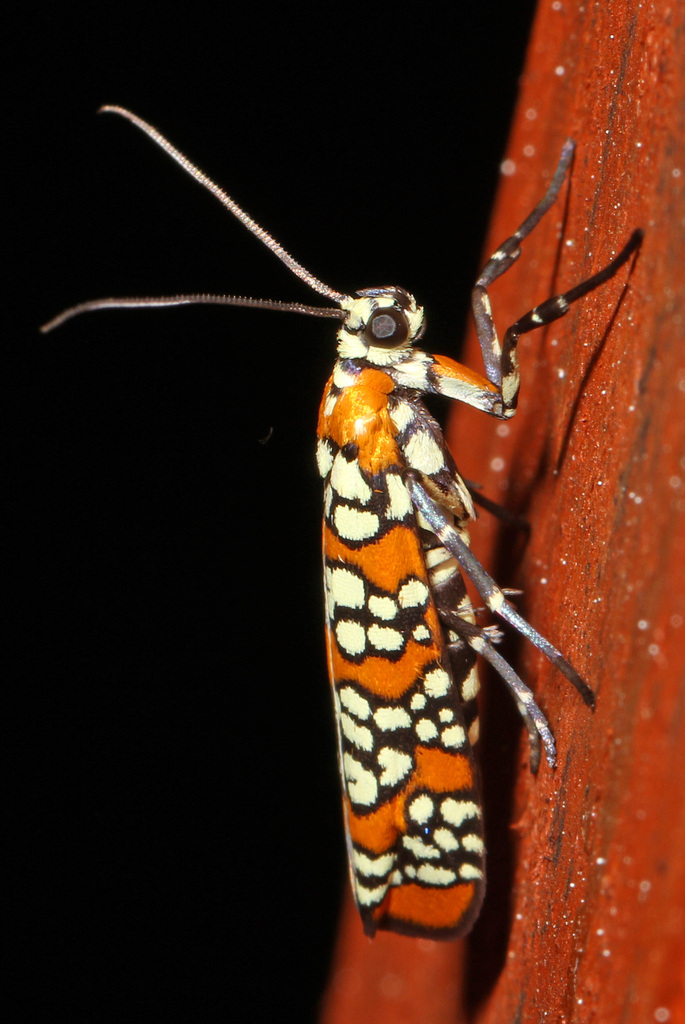
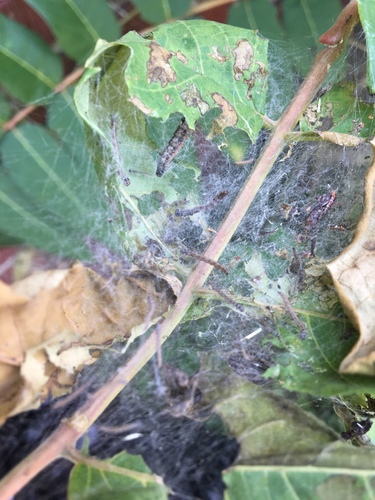
The ailanthus webworm moth has bright orange forewings with white spots edged in black and upward-curving labial palps on its head. It is native to the American tropics and South Florida, and adults are daytime pollinators that visit flowers. Its life cycle can complete in about four weeks, producing communal webs that contain multiple generations.
Source: Wikipedia
How to recognize it
The head bears upward-curving labial palps and forward-facing antennae.
Source: Wikipedia
What it eats
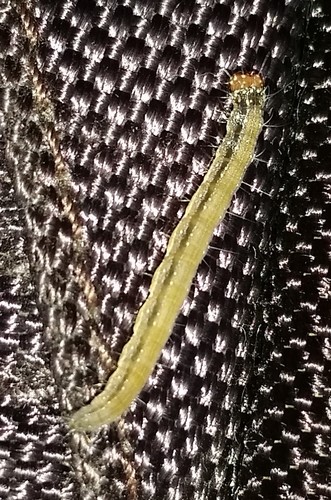
Caterpillars display a wide light-greenish brown stripe down the back and thin alternating white and olive-green side stripes. Adults visit flowers during the day and act as pollinators.
Source: Wikipedia
Life cycle
Eggs develop to pupae in roughly four weeks. Webs can contain several generations and all life stages together.
Source: Wikipedia
When you see it
The moth is now being seen farther north, possibly due to climate change. It was originally a southern U.S. species but is now common in summer across the continental United States.
Source: Wikipedia
Where it comes from
Originally found in South Florida and the American tropics, its range follows the distribution of the paradise tree.
Source: Wikipedia
Lookalikes
When at rest it looks like a beetle or true bug, but in flight it resembles a wasp.
Source: Wikipedia
Where it is found in the US
Recorded in 41 of 51 states and DC. Most records: Texas, Ohio, Virginia, North Carolina, Illinois, Maryland, Pennsylvania, New York.
Darker = more records. Counts are museum and citizen-science records, not population size.
Source: GBIF
Status: introduced in Canada. Source: iNaturalist
Months it is reported in the US
Source: GBIF
More photos


Same family (Attevidae)

Sources
- Wikipedia: https://en.wikipedia.org/wiki/Ailanthus_webworm
Look it up elsewhere: GBIF · iNaturalist · BugGuide · Wikipedia
Text written 2026-10-22 from the sources above and checked sentence by sentence against them. Data fetched 2026-10-22.